The best of Jaisalmer

This post covers some of my best experiences visiting the Golden City of Jaisalmer in December 2022.

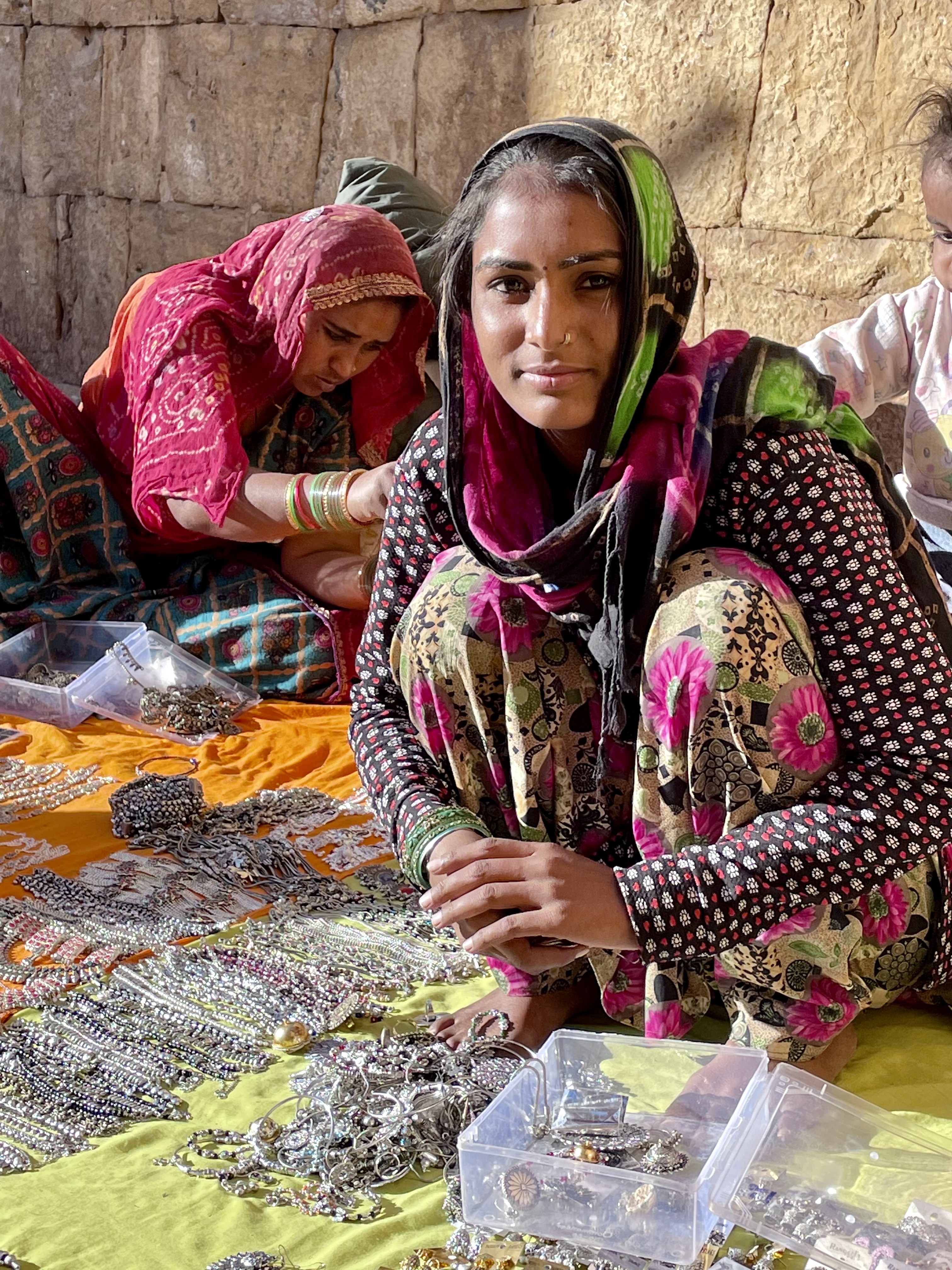
Jaisalmer is one of the westernmost cities in India, located in the state of Rajasthan, and close to the Indo-Pakistan border. The city is characterized by the stark landscape of the Thar desert, scant vegetation, and torrid weather. Yet Jaisalmer and its people are mesmerizingly beautiful, surprisingly humble, and will touch your soul deeply.

I also briefly cover topics like local cuisine, lodging, and transport below if you are planning a trip to Jaisalmer. So grab a cup of tea or coffee and read on.

Where to stay

Tourists visit Jaisalmer from all over the world so the city has plenty of options for lodging. You can stay in one of the many homestays in the city easily reserved through a travel website or reserve a room inside the Jaisalmer fort itself if you want to maximize your heritage living experience.

I stayed at the Moustache Backpacker Hostel adjacent to the Jaisalmer Fort. This had a few advantages. Firstly, it was extremely easy to access the fort and the surrounding market within a 5-minute walk. The hostel is located right next to the fort and has stunning views of the eastern wall. Secondly, travelers from many nationalities were staying in this place and it was delightful to meet and learn about their cultures. The staff at Moustache were extremely friendly and accommodating which made the experience even better.
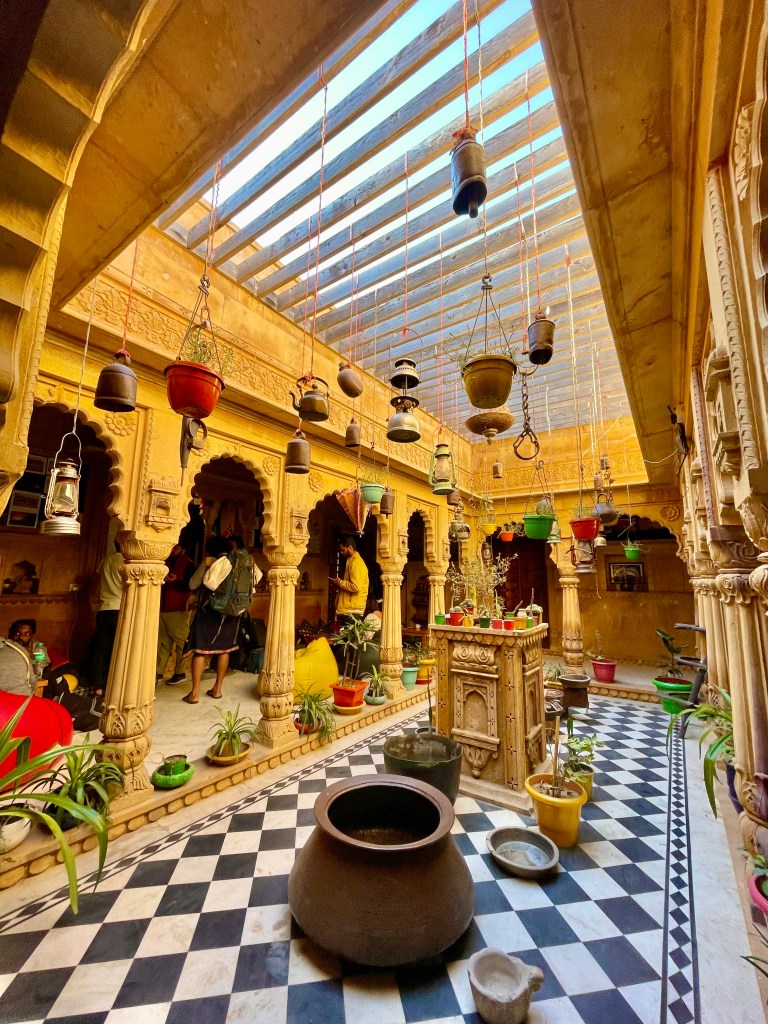
Moustache Backpacker Hostel in Jaisalmer

Local cuisine

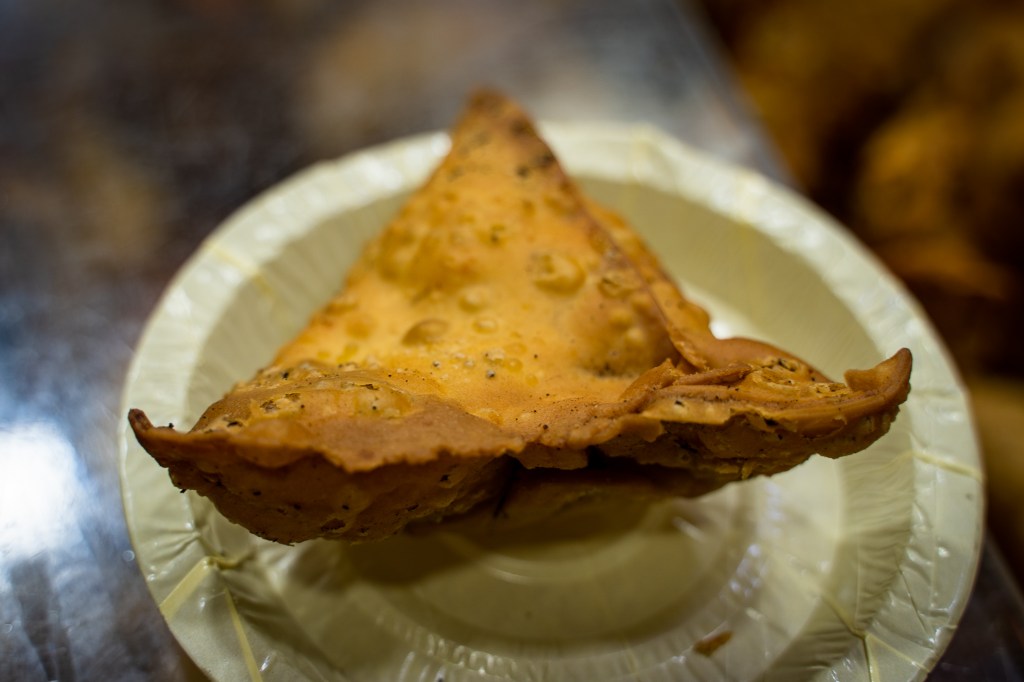
You must treat yourself to a plethora of snacks when in Jaisalmer. The most famous and my personal favorite is the Kachodi (stuffed and fried dough) which comes in different varieties – Pyaz Kachodi (onion filling) and Daal Kachodi (lentil filling). If you are getting the early morning carb craving, go for the Samosa (stuffed and fried potato dumpling) or the Mirchi Bhajji (stuffed and fried pepper).

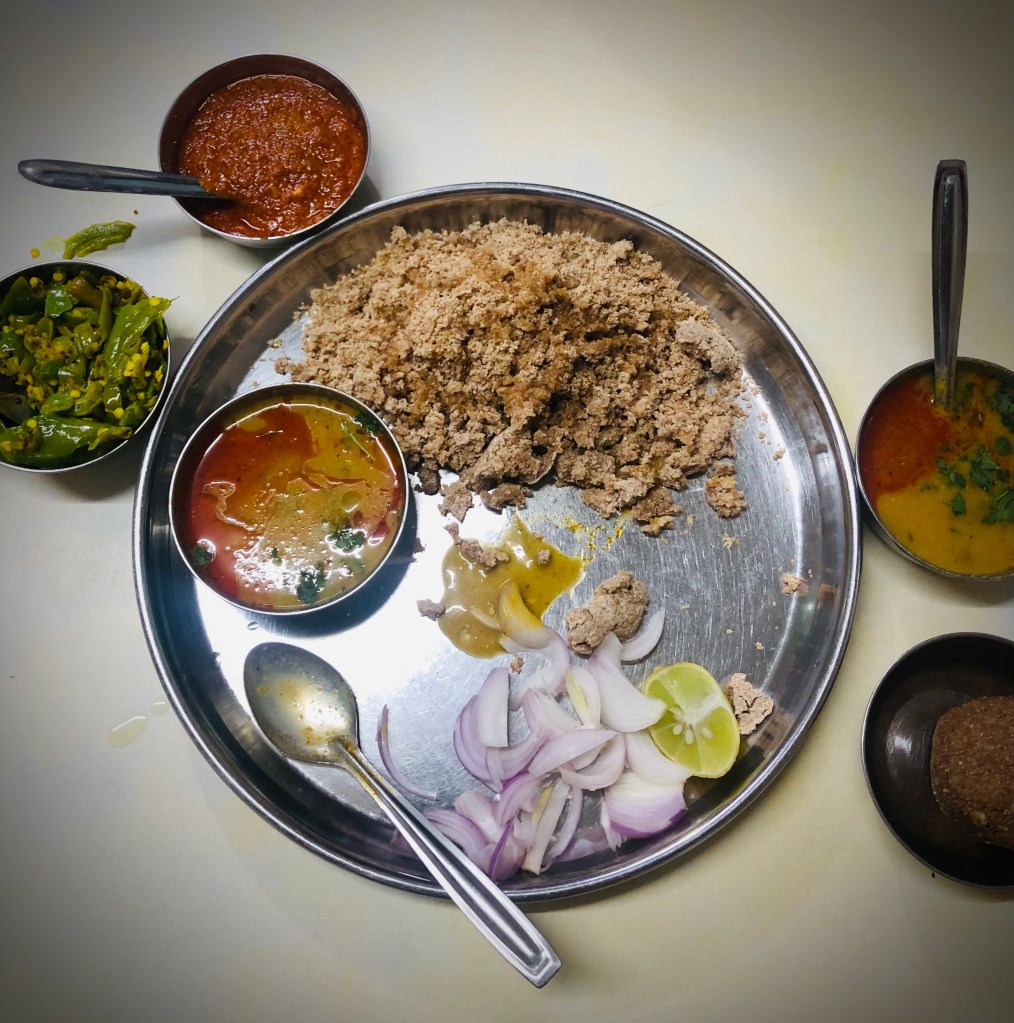
Also on the list is the Rajsthani Thali, an assortment of many vegetarian curries, stir fry, rice, and bread. Some of the vegetables may be quite unique since they are grown and harvested from the desert. Treat yourself to the famous Daal Batti (crumbled whole wheat and lentil soup) and Churma laddoo (a delicious sweet to end the meal).

You can find these delicacies at the restaurants and street shops near the entrance of the Jaisalmer Fort.
Desert safari, camping, and stargazing

There seemed to be two types of desert safari experiences available in Jaisalmer. One is the luxury camping experience usually at large established desert camps with permanent tents, full-sized beds, and a well-structured program built for comfort. Typically, these campsites also feature adventure activities like parasailing, ATV riding, local dance performances, etc. If you have never camped in your life before, I recommend going for this option.

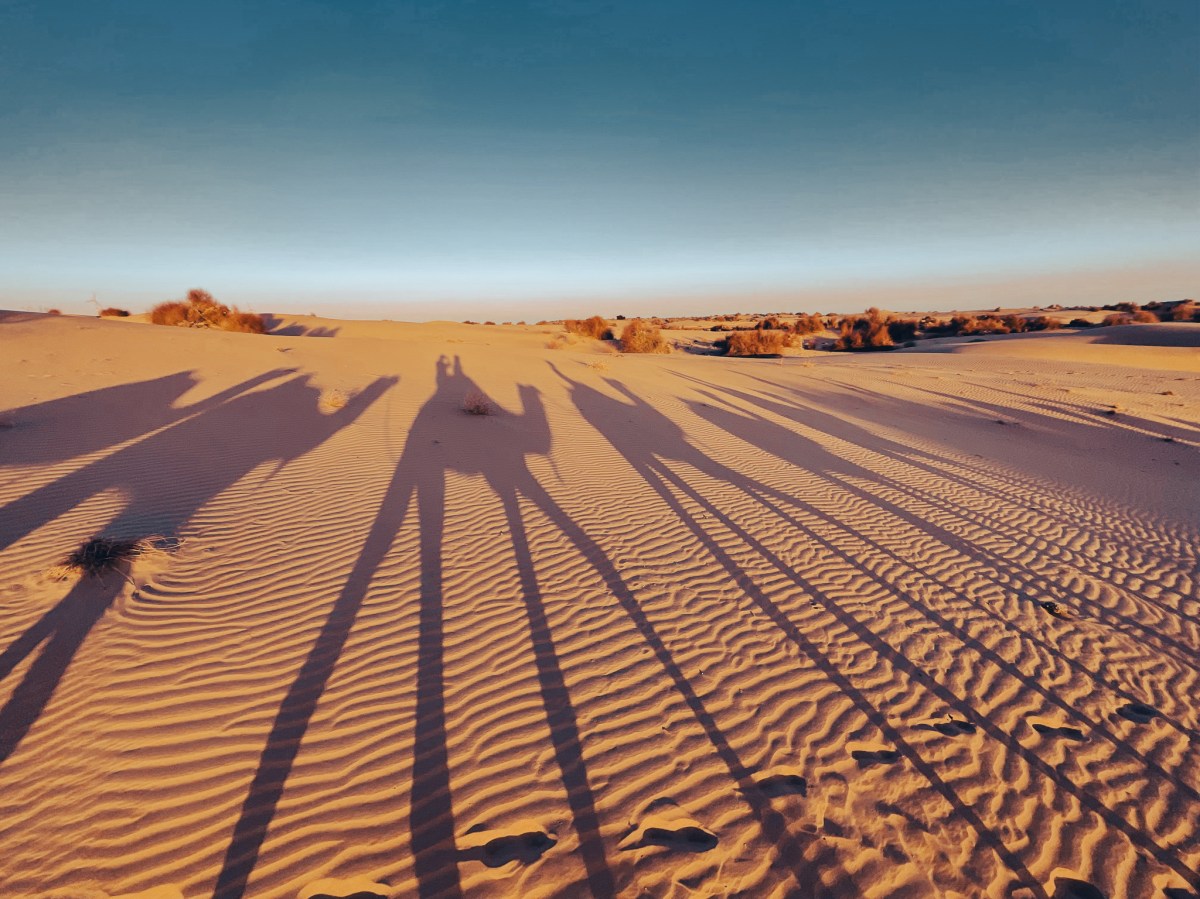
The other is the more adventurous version which is closer to nature. In this you will sleep inside small tents or out in the open desert, eat local food cooked by your tour guides, talk, laugh, and sing in front of a bonfire, and stroll into the dark under the brilliantly lit starry night. There will be no toilet facilities but I can assure you that doing your business out in the open can be quite liberating! I’ll leave the choice to you. 

I ended up choosing the group camping and safari experience offered by Moustache. It included pick up from the hostel, sightseeing at nearby villages, riding into the desert, camel and sand dunes safari, bonfire, overnight stay in tents, evening snacks, dinner, breakfast next morning, and drop off to the hostel. This was priced at 2150 INR (approx. $25) at the time of writing.

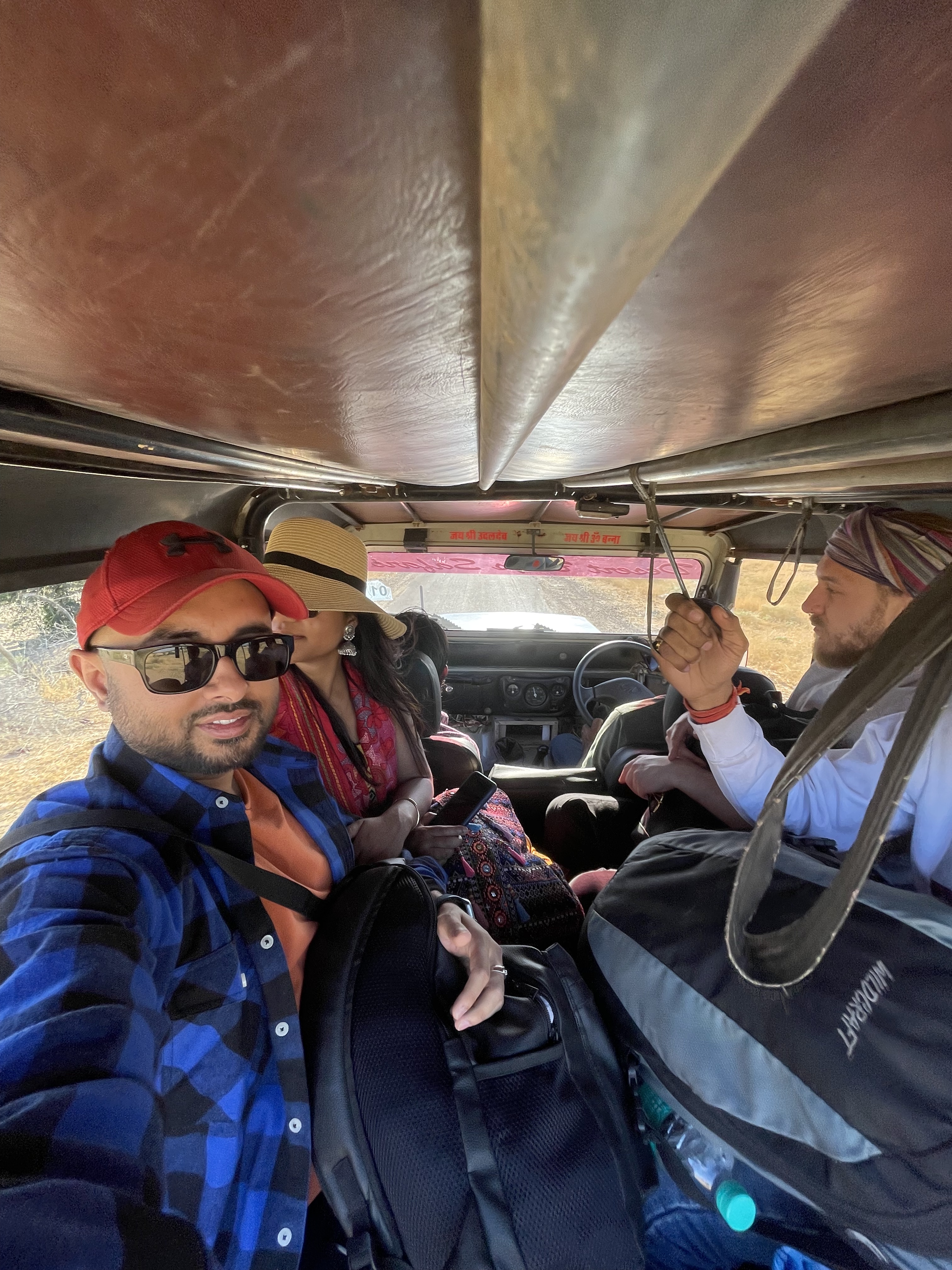
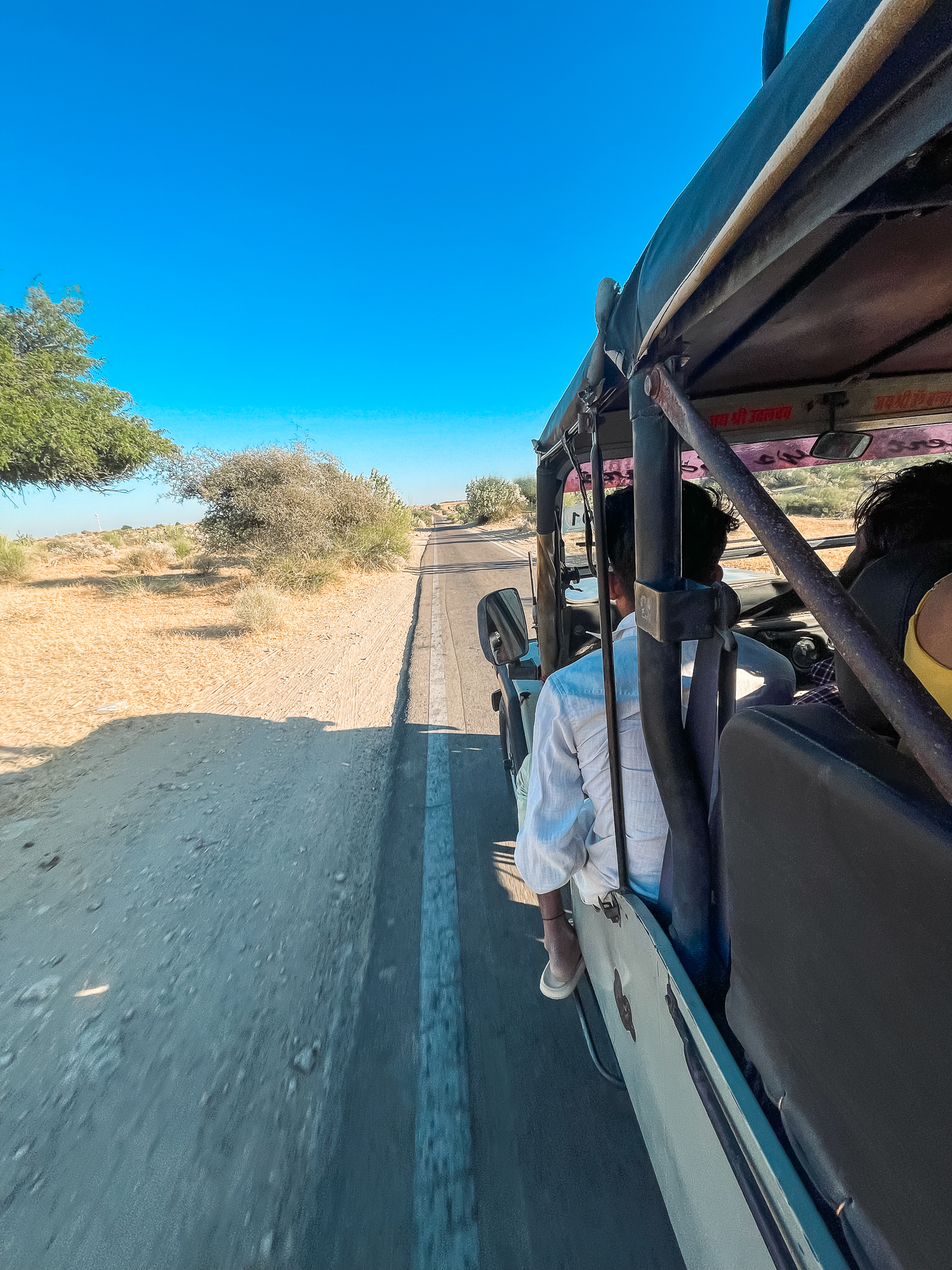
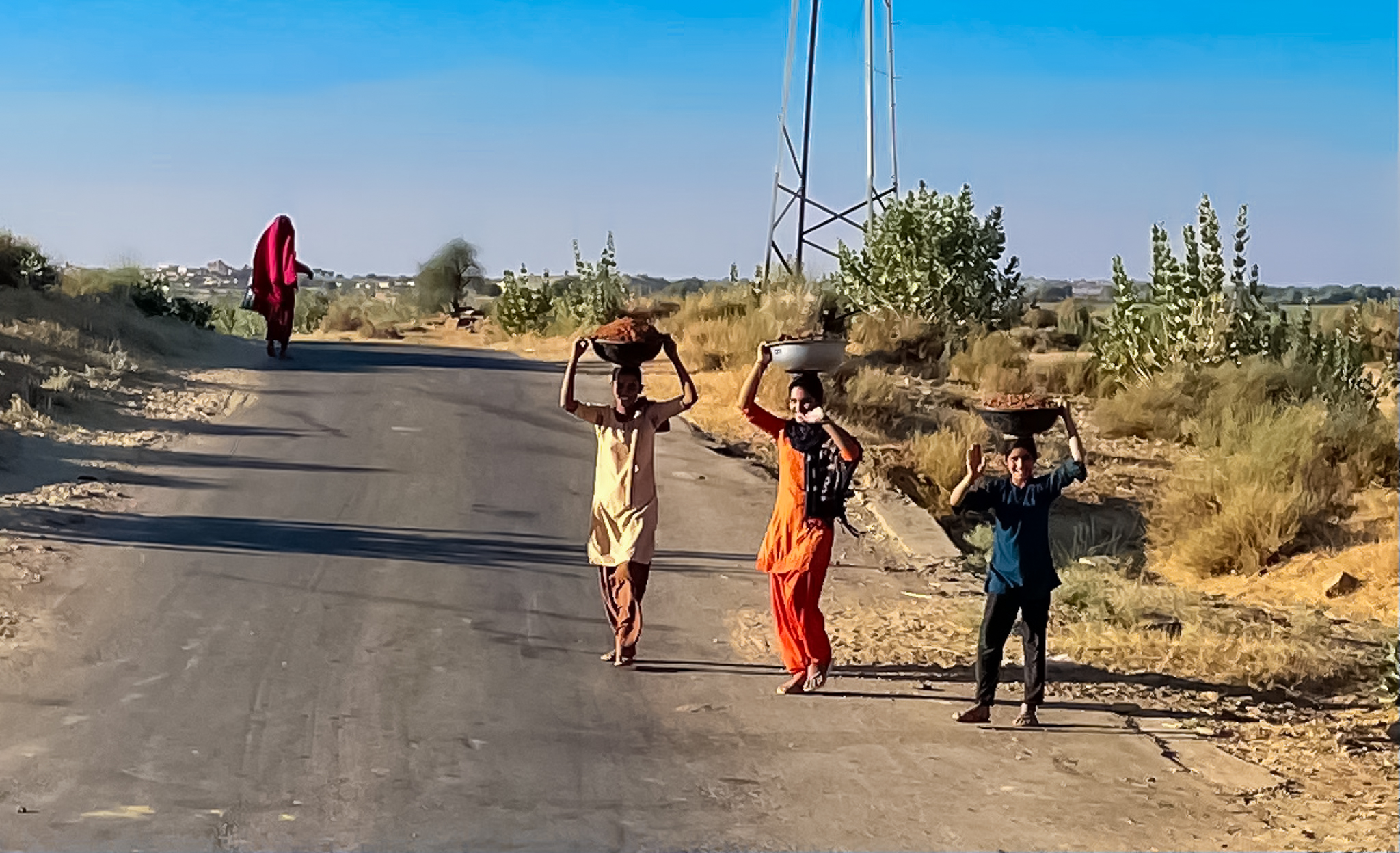
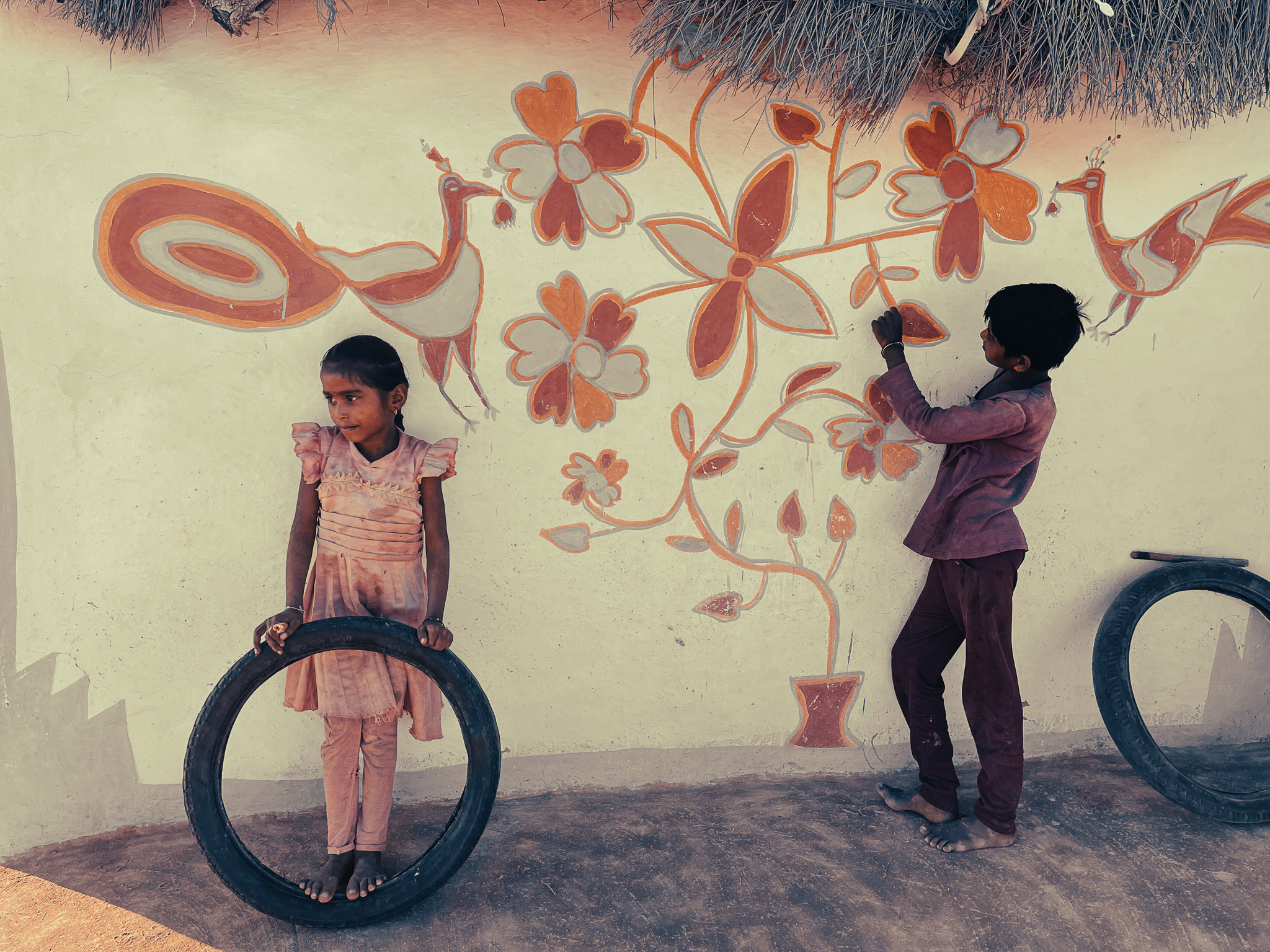
The group on that day was about 10 people strong. We were picked up in the afternoon from the hostel by the desert crew. Our vehicle was an old Mahindra Jeep which although it felt like it would come apart at any moment but did the job quite well. On the way to the desert, we stopped at a small village to interact with the locals, see their homes and learn about their lifestyle. The children waved at us as our car drove past the school. Some were bribed with a chocolate or two for agreeing to pose for a picture 🙂.
Camel ride into the desert

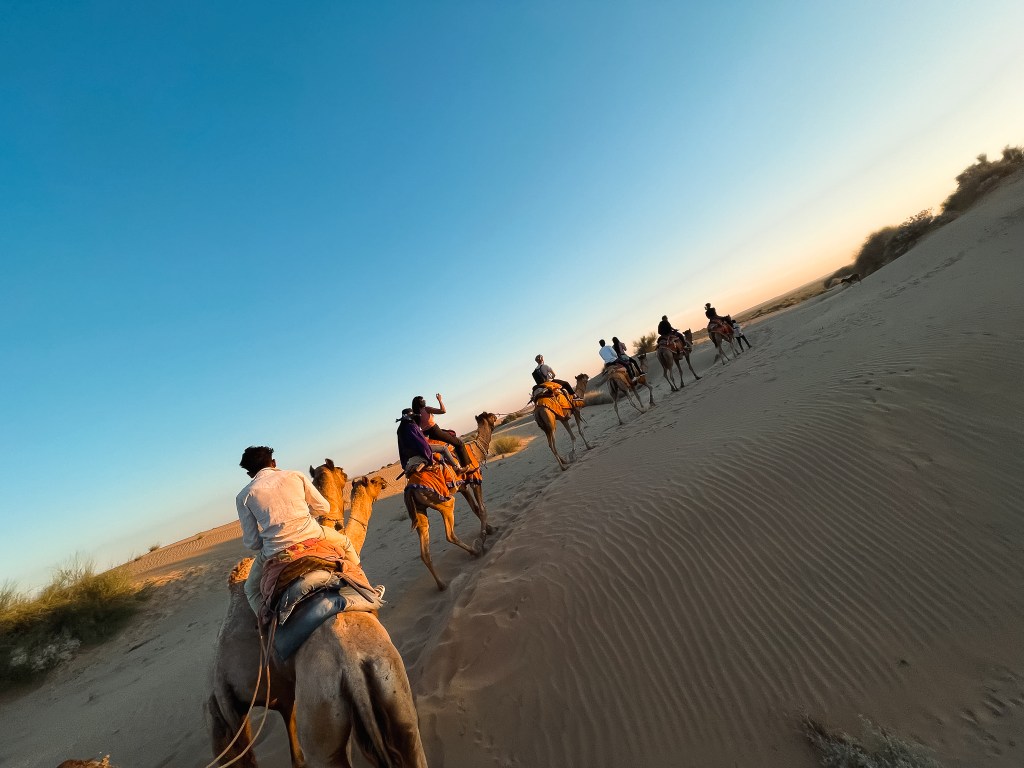
The second part of the journey involved a camel ride to the sand dunes. Fear not if you’ve never ridden a camel before, they are tame, obedient, and bovine creatures. That being said, do not go overboard with showing your unbounded puppy love, or else you may be rewarded with a bone-shattering kick. The dunes were a few miles away from the drop-off point and after about an hour’s worth of riding, we finally reached the campsite.
The almighty Himmat

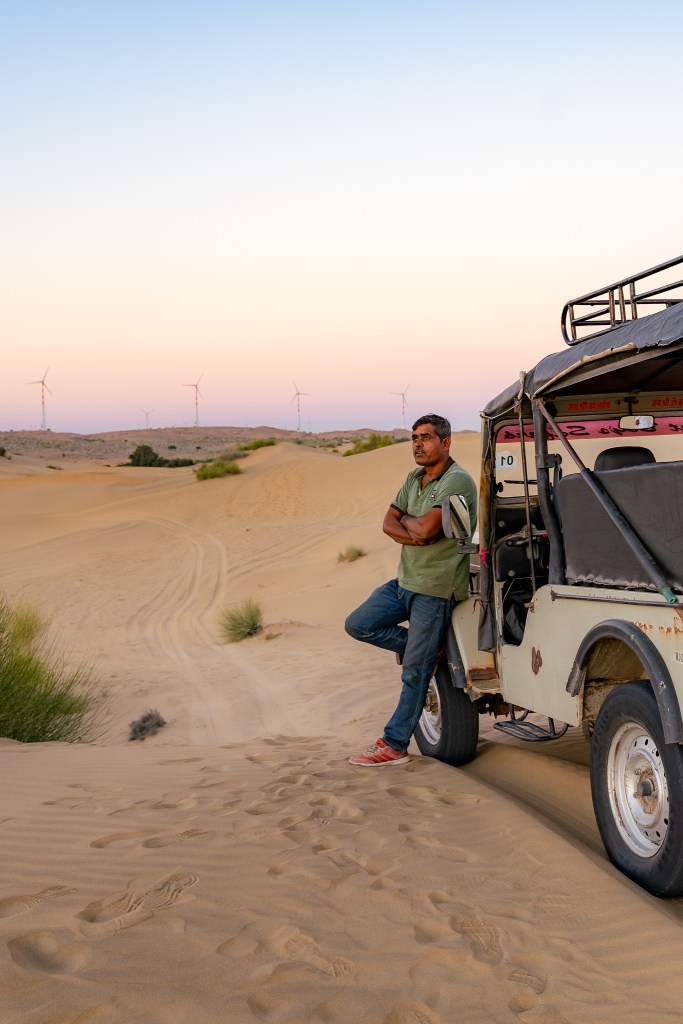
It was about sunset time and our chief tour guide Himmat (which means Courage or Daring 😉) took us on a ride in the Jeep. It was as if Himmat literally transferred half his abilities to the ancient machine which now roared like a lion, swerved on the sand, and cut through 45-degree slopes with ease. The rollercoaster-like ride induced mixed emotions in the panicked passengers, Himmat was amused at their plight. The ride ended with a spectacular view of the sun setting over the dunes.
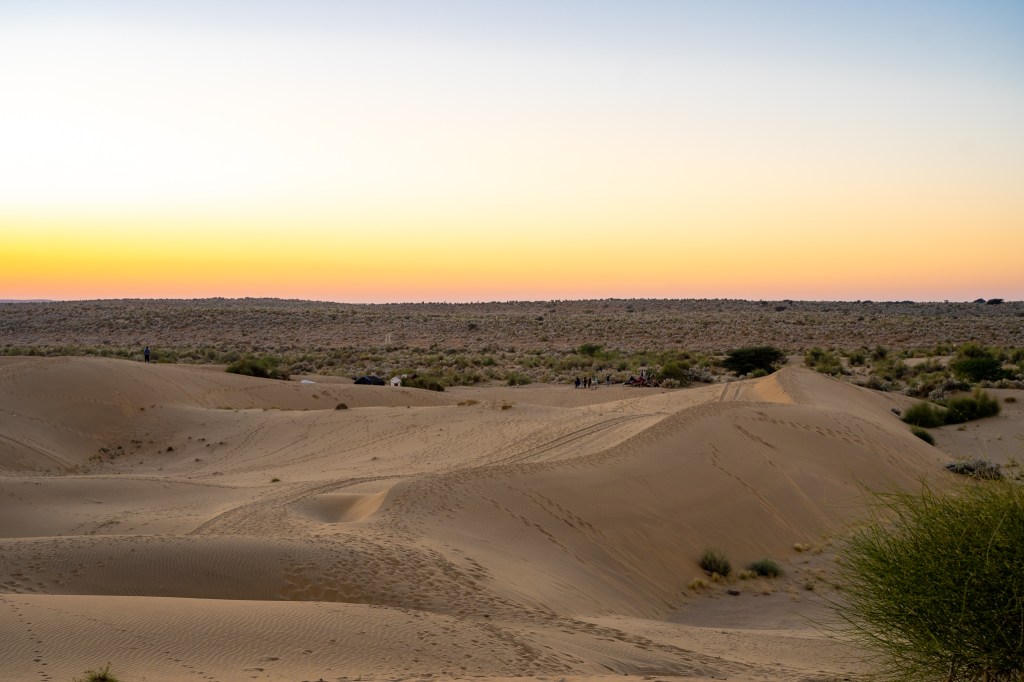
Twilight over the dunes

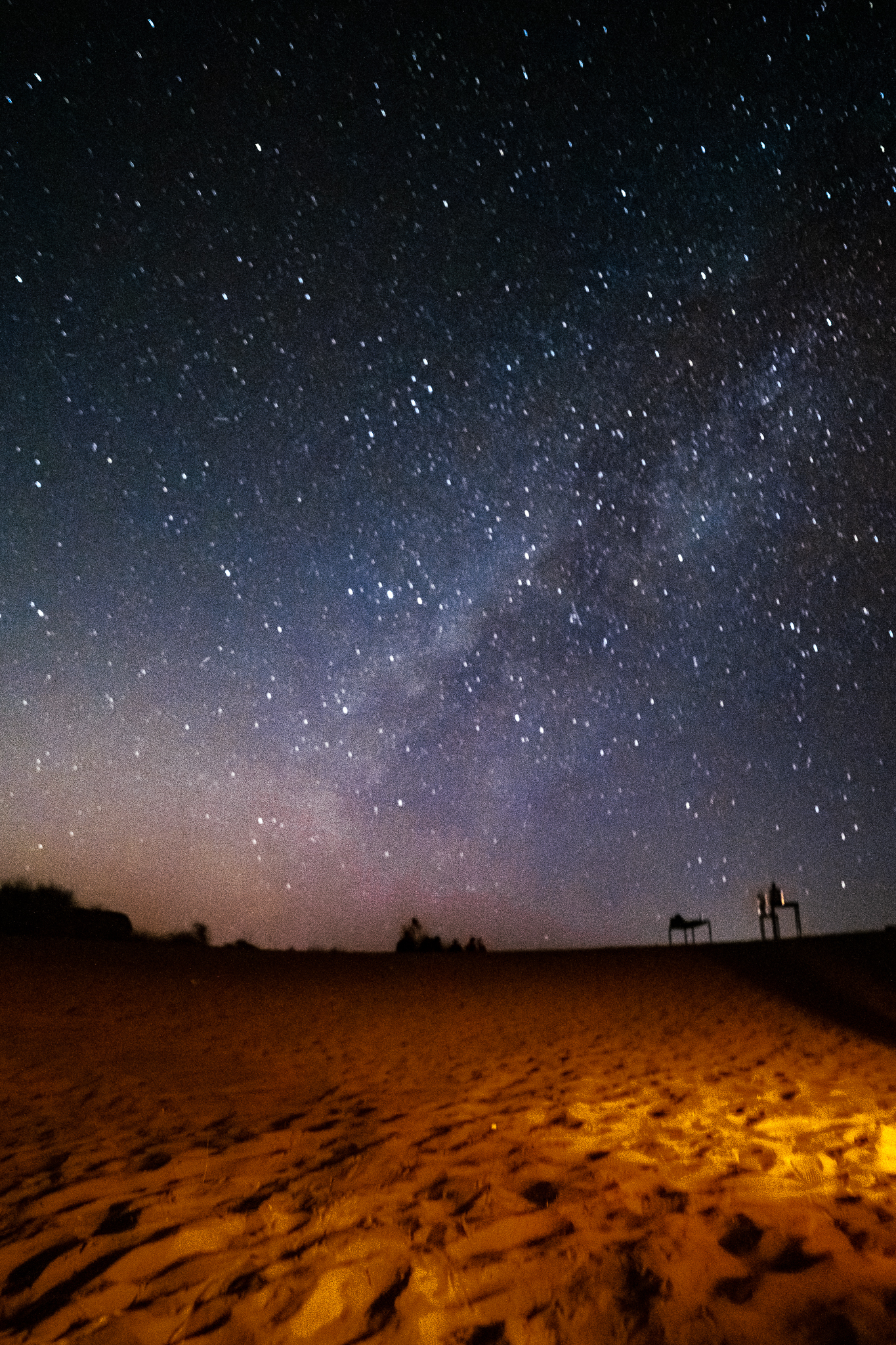
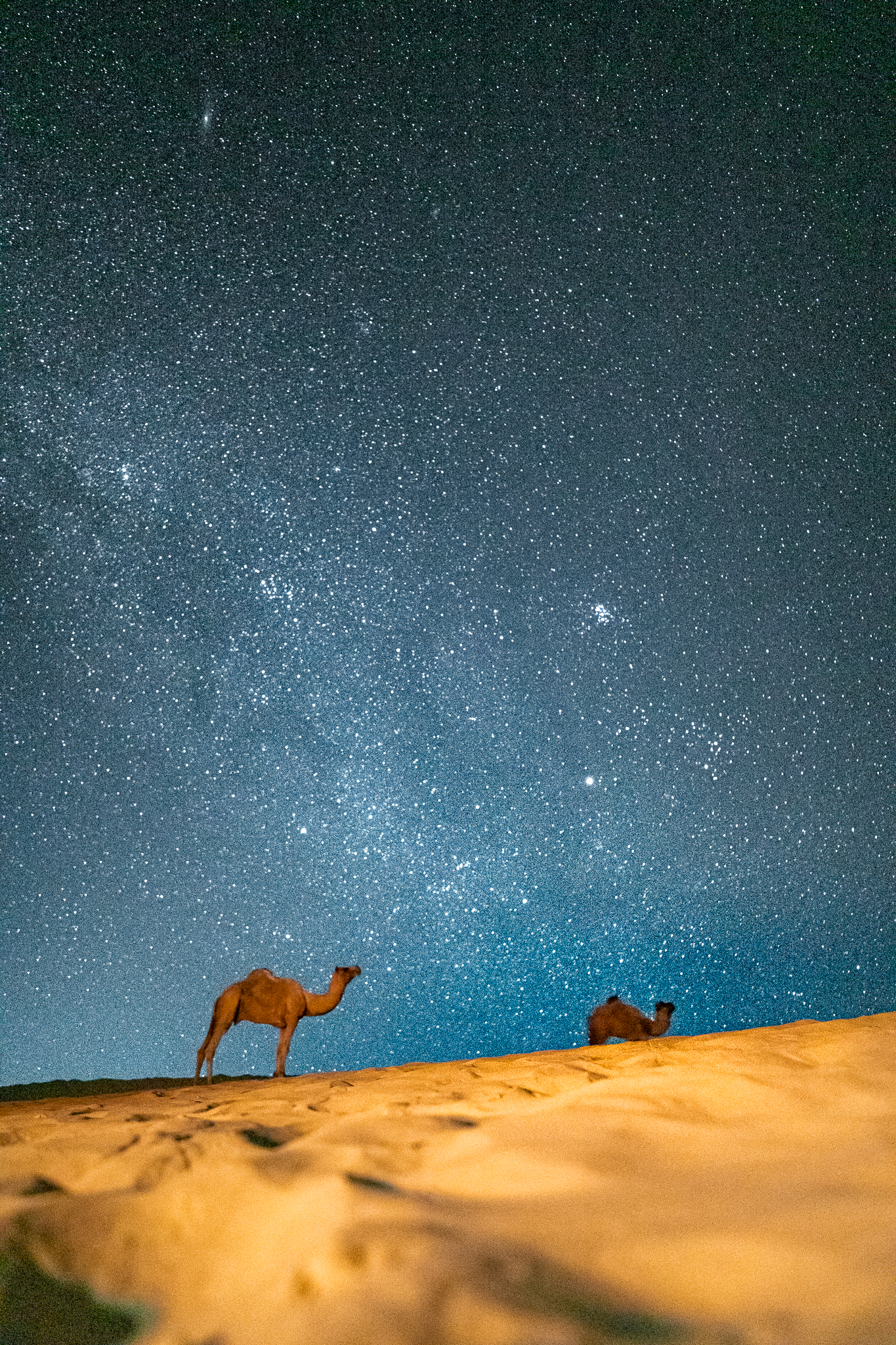
Soon after the sunset, a cool breeze swept over the dunes and took away most of the latent heat trapped in the sand. A bonfire was lit and the group had gathered around sharing stories about life, culture, and travel experiences. As it got darker the sky was lit up with the light of millions of stars. It was the perfect opportunity to shoot some photos of the night sky.

After dinner, the tour guides led us on a short safari of the dunes in the dark. We walked for about a mile away from the campsite and found a small decline to lie down on and gaze at the night sky. Those few hours we spent under the stars in silence, wondering about distant worlds, absorbing the magnificence of the universe, and falling asleep on the sand were one of the most soul-searching and deeply satisfying experiences I have ever had.
Jaisalmer Fort

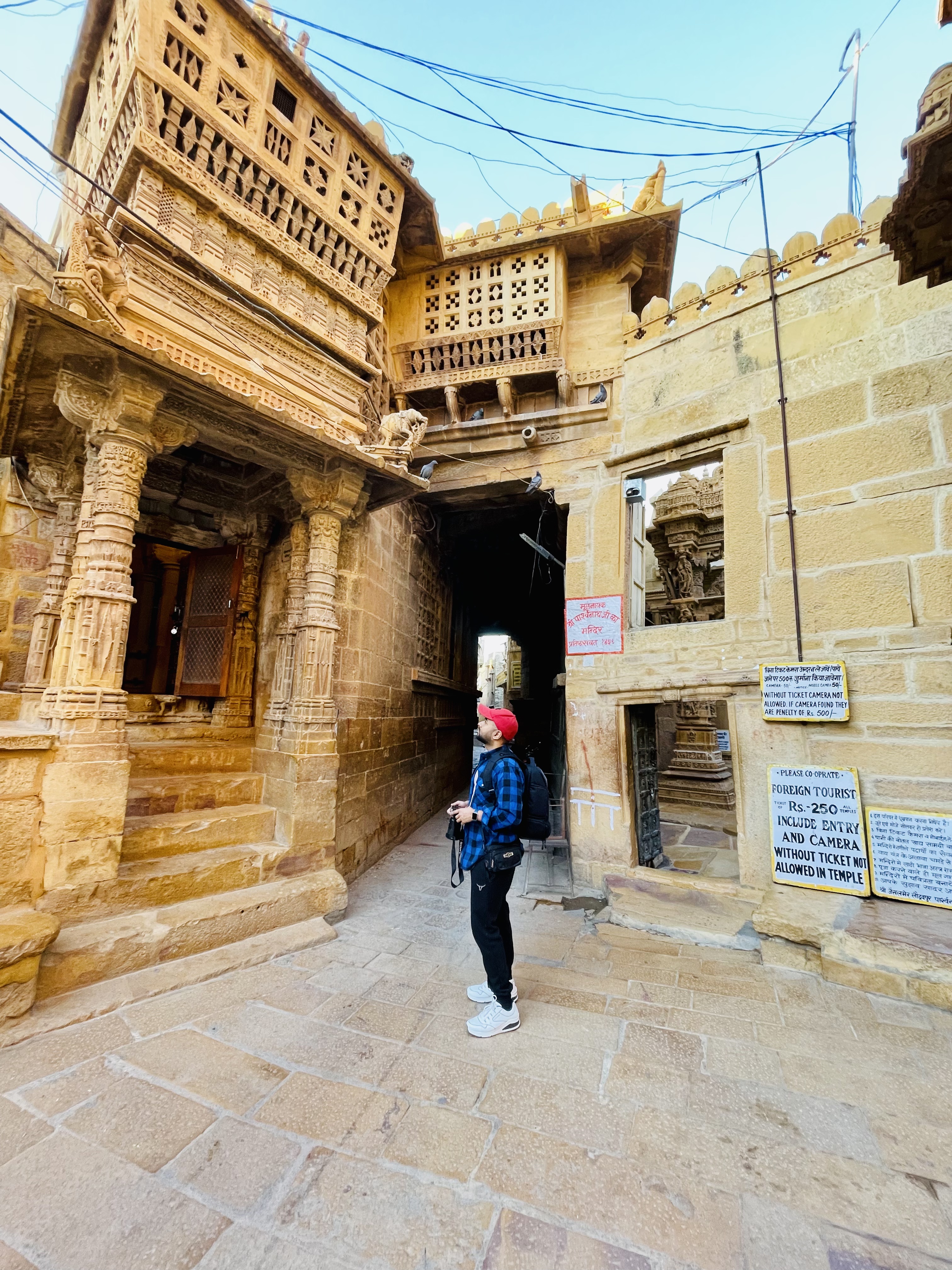
The other major attraction is the Jaisalmer Fort or Golden Fort. It is one of the few “living forts” in the world with more than four thousand people living inside the fort. The name Golden Fort is attributed to the golden sandstone rocks which the fort is built with. The rocks resemble gold when sunlight shines on them, hence the name. 
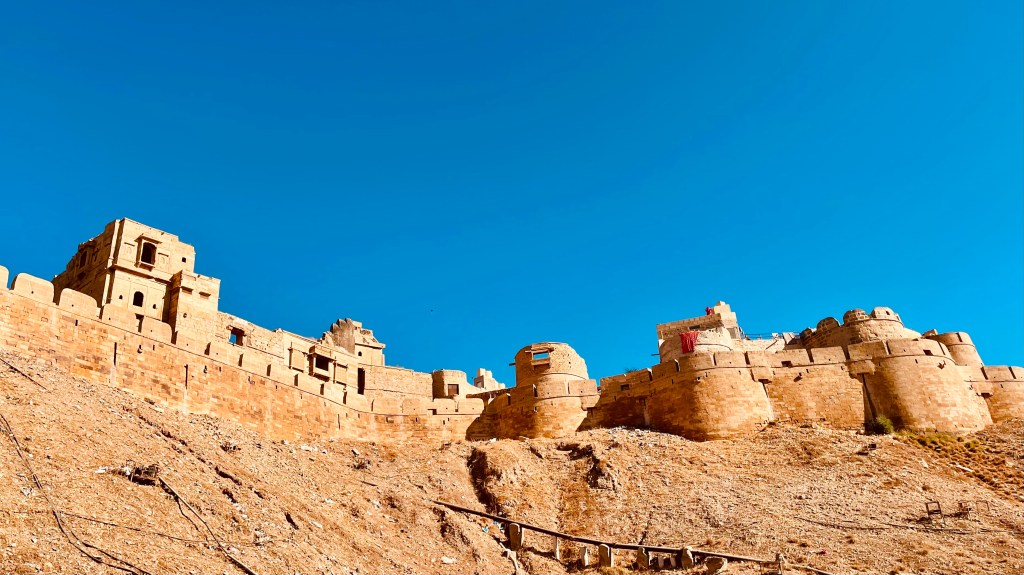
The Golden Fort at Jaisalmer

If you prefer peace and quiet, the best time to experience the fort is during the early hours around sunrise. At this time you will manage to stay clear of the tourist crowd and sometimes over-zealous tour guides. Start climbing the fort from the main entrance at the base and work your way upward through the cobbled streets. If you are on time, you will be treated to stunning views of the sun rising over the city.
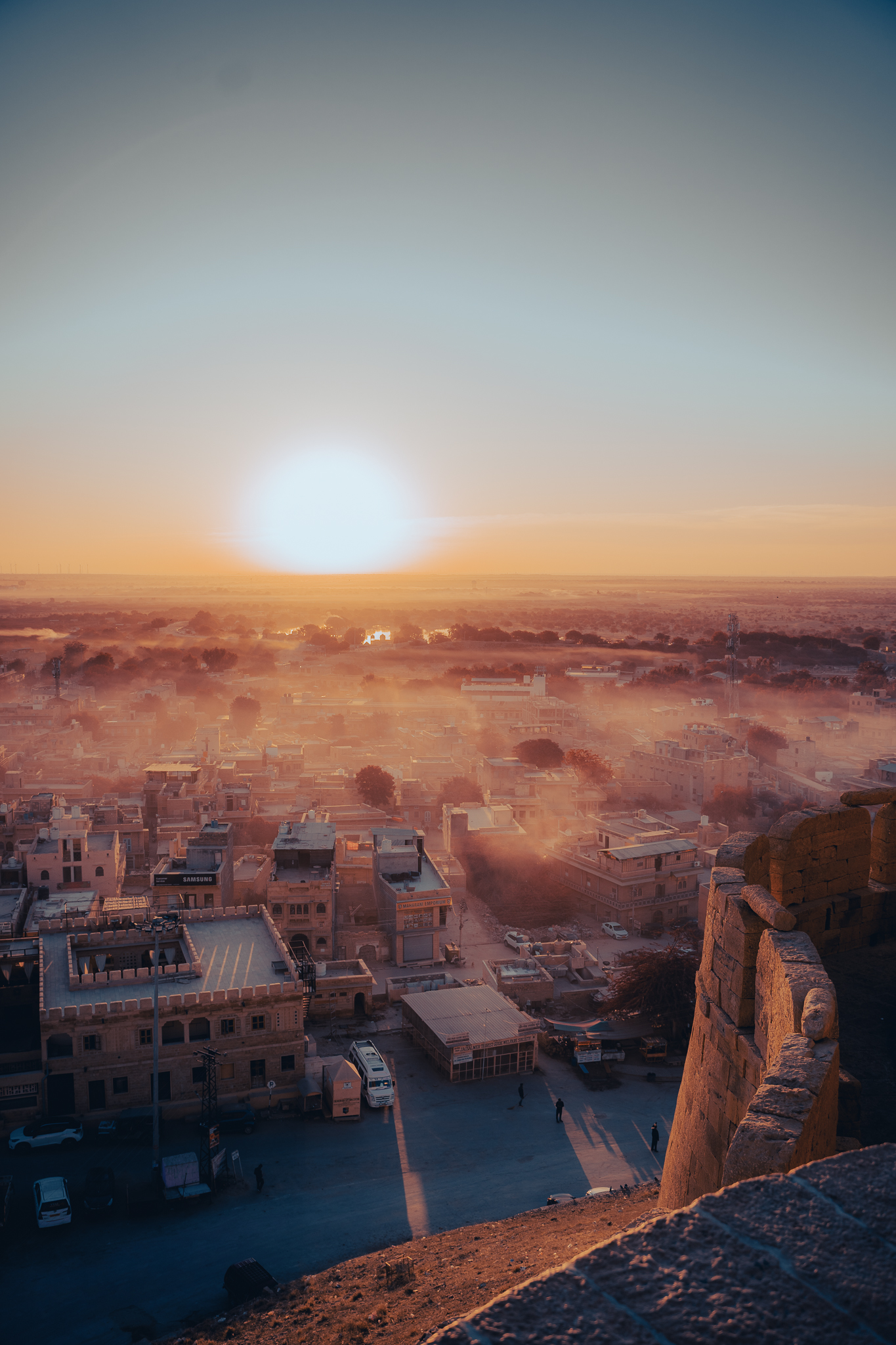
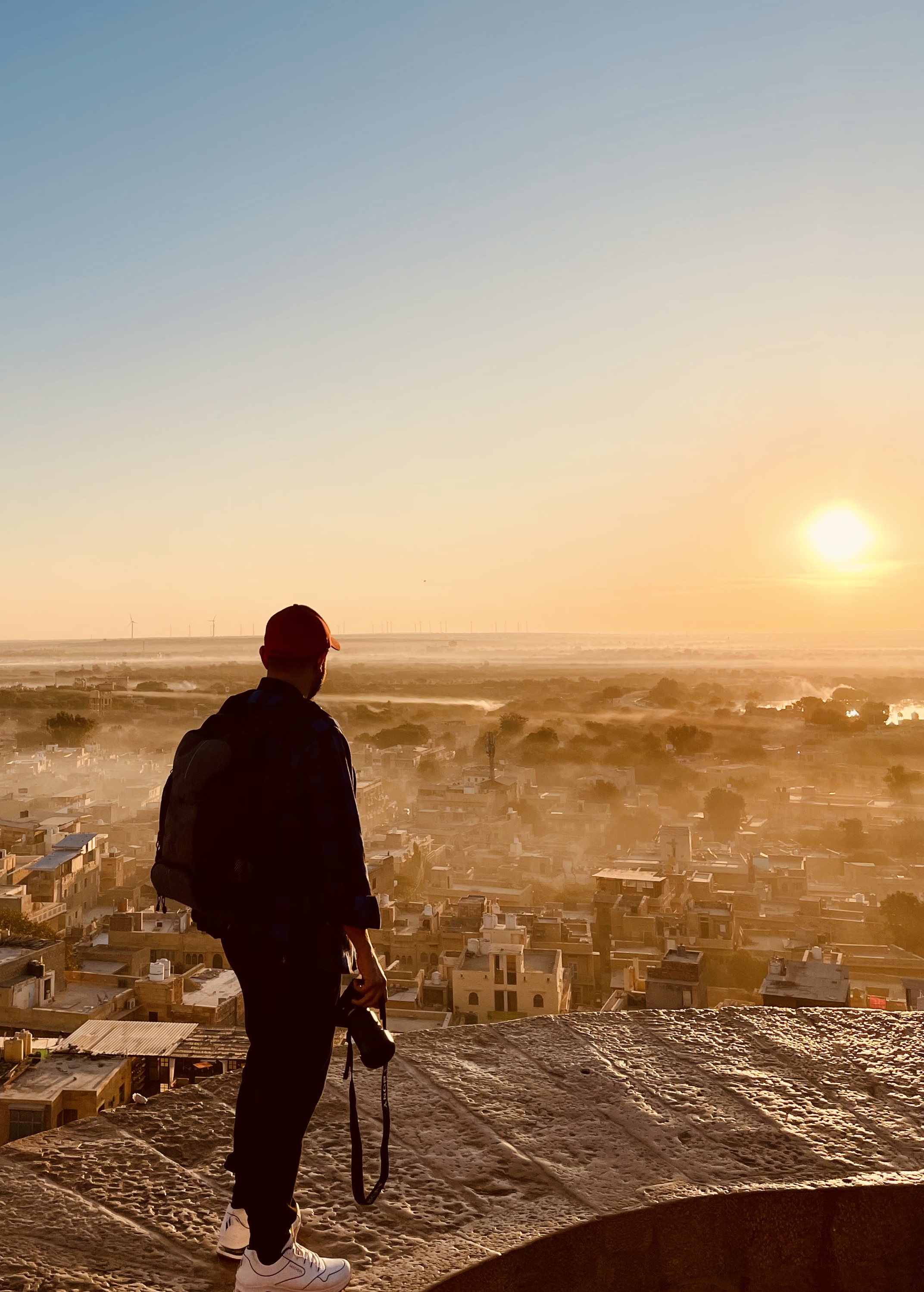
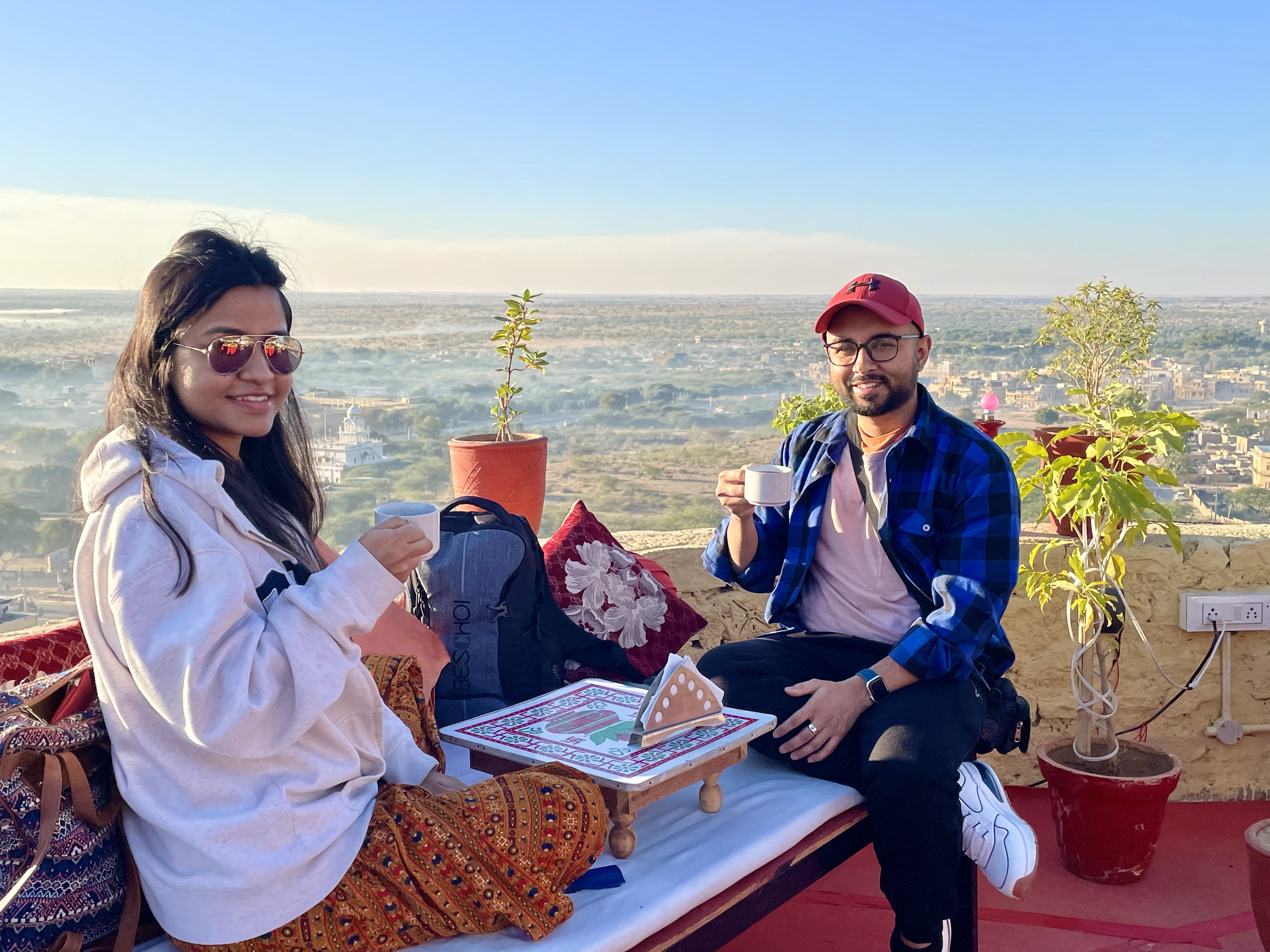
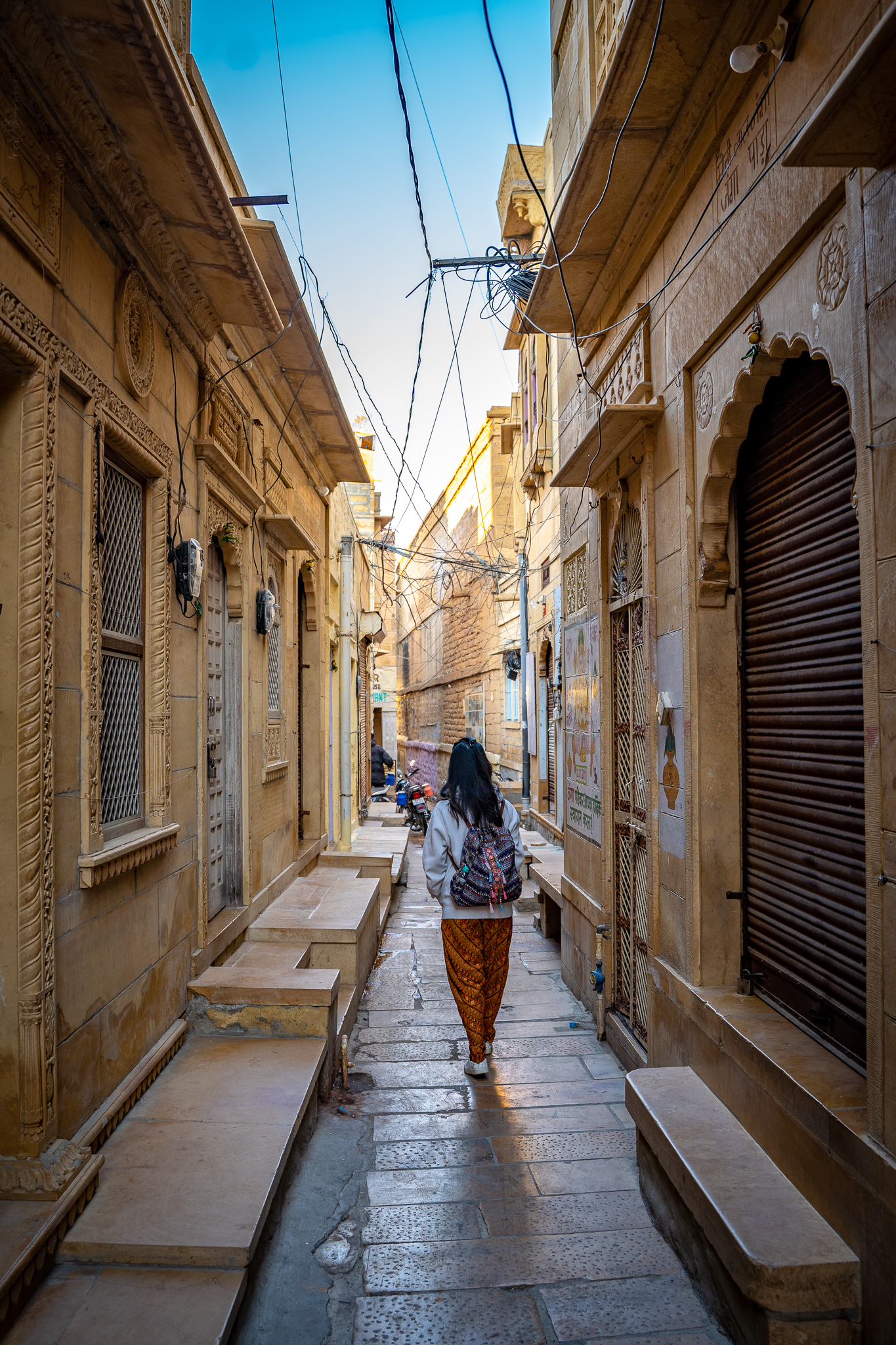
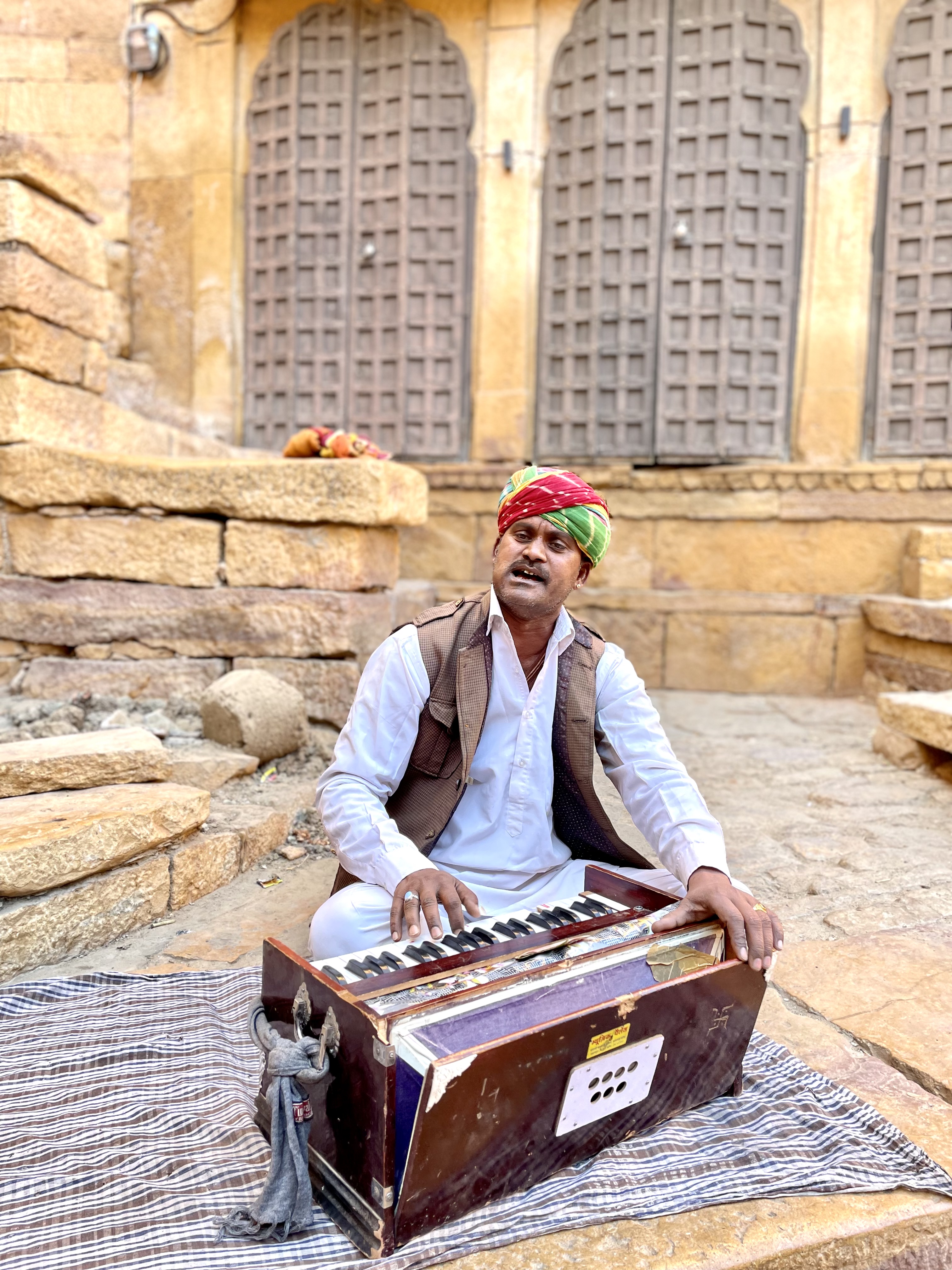
The fort is a mini city in itself – Havelis (houses) are converted into shops, rooftop restaurants, numerous living quarters, markets, and more are found at every corner. There is a remarkable vibe inside the fort which felt like a mix between the temple scenes of Varanasi and the monasteries of Tibet. The locals have little in terms of wealth or property, but yet are vibrant, proud, and greet you with tremendous warmth and hospitality. You can stop at one of the many rooftop restaurants and enjoy a cup of tea or coffee while enjoying the view of the city.
Verdict

Overall, the city of Jaisalmer and its people will be etched in my memory for a long time until I visit again. The unique places, history, culture, and friendships made during this trip have provided me with valuable life experiences that I will cherish forever.

Thanks for patiently reading this article and hope I gave you enough inspiration for traveling to Jaisalmer.
Shooting the night sky in Acadia National Park

On my recent visit to Acadia National Park, I found some great locations for night sky photography that I am sharing in this post.

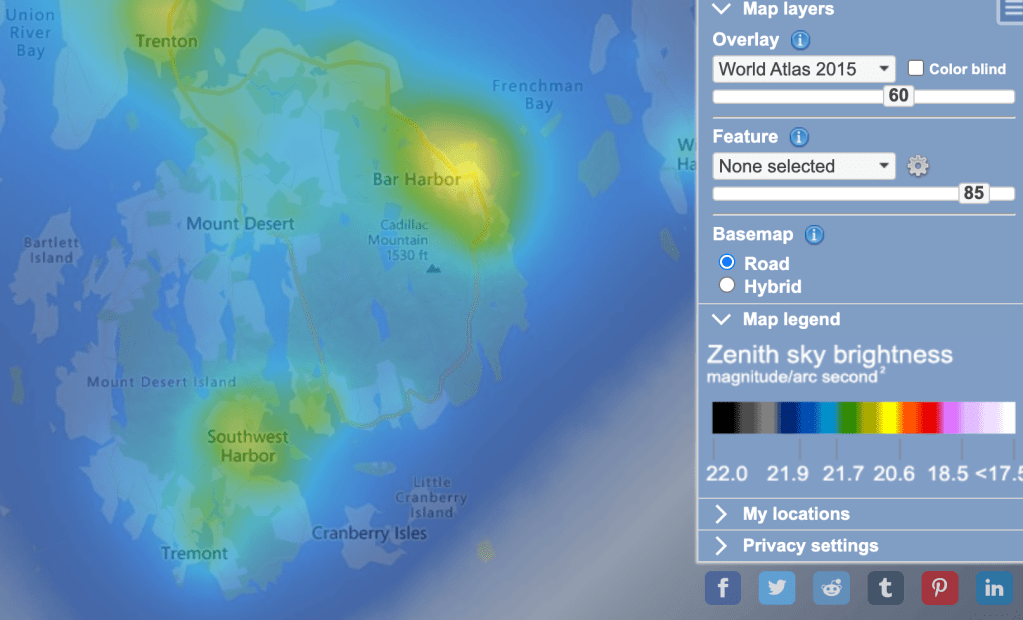
As an enthusiast of long-exposure photography (especially astrophotography) and I’ve been chasing the night sky during the last few years of living in the northeastern United States. When it comes to shooting the night sky, the availability of suitable conditions plays a key role in deciding the quality of the final image. Acadia National Park in Maine is a crown jewel in that regard, with some of the darkest night skies in the United States. Below is a snapshot of a light pollution map that kind of speaks for itself. This is a photographer’s paradise.

Light pollution map of Mount Desert Island

Preparation

The image that I had been mentally composing for a few months before the trip was a rocky shore in the foreground and the galactic center of the Milky Way rising from the horizon. To make this a success, I needed to plan ahead. Here are some of the things that went into account.

Firstly, the galactic center is at its brightest in the northern hemisphere during the months of July to October. So it was necessary to plan the trip around this time. The July 4 long weekend seemed to be the perfect opportunity.

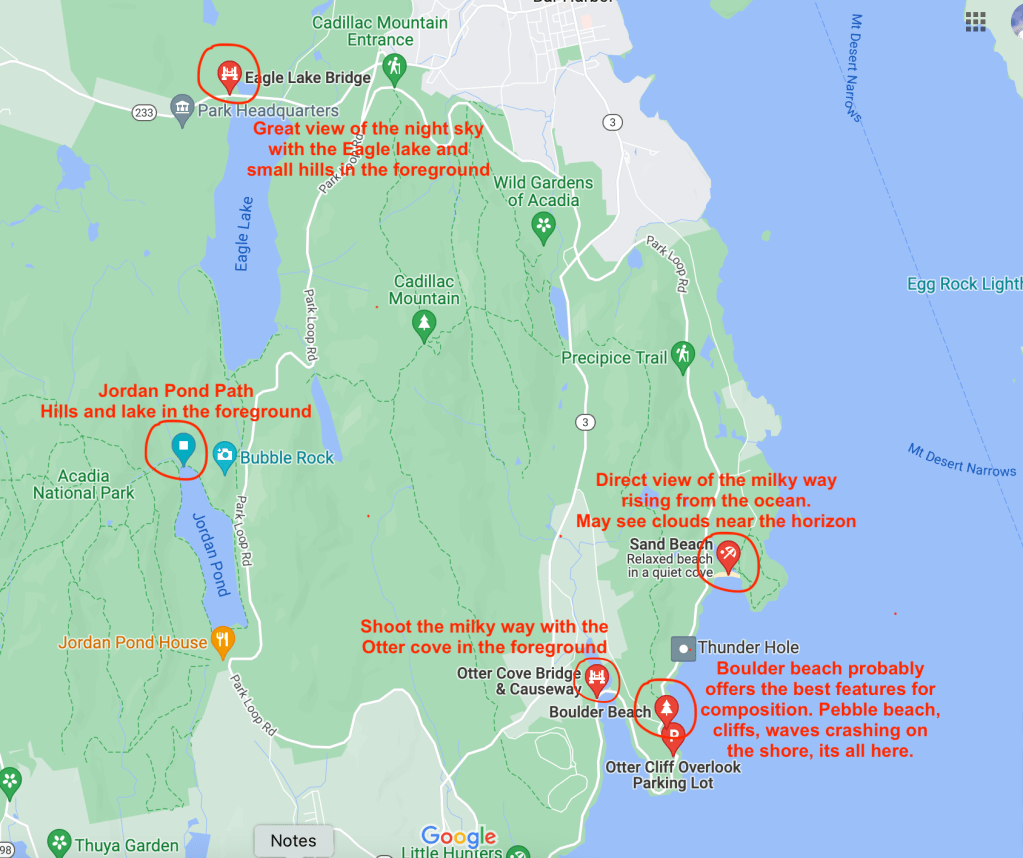
Next, I needed to find locations that offered good composition. After scouting for information online on Google maps, images, and blogs I decided to stick to the southeastern part of Mount Desert Island. This seemed to be both easily accessible by car, and free from light pollution. I ended up discovering these really nice spots, illustrated on the map below. See my Google Maps list for reference.

Locations of interest for night sky photography

My camera gear for the trip consisted of my trusted Sony Alpha 7C, a Tamron 28-75mm f/2.8 lens, and a Sony FE 20mm f/1.8 G lens. I used the 20 mm for most of the night sky photography.

My photography equipment

Sand Beach

Sand Beach was the first spot on my list. There is a large parking lot here with plenty of free spots at night. The beach is accessed by a short walk from the parking lot. If you are coming here at night, be sure to bring a small LED light to see through the dark. Preferably bring a red LED which helps in getting your eyes accustomed to the dark better. If you were thinking of your smartphone flashlight that works too, but I must warn you that you will bear the resentment of other photographers in the area. Bright white light is the greatest enemy of night photos. So be cool and bring a red one.

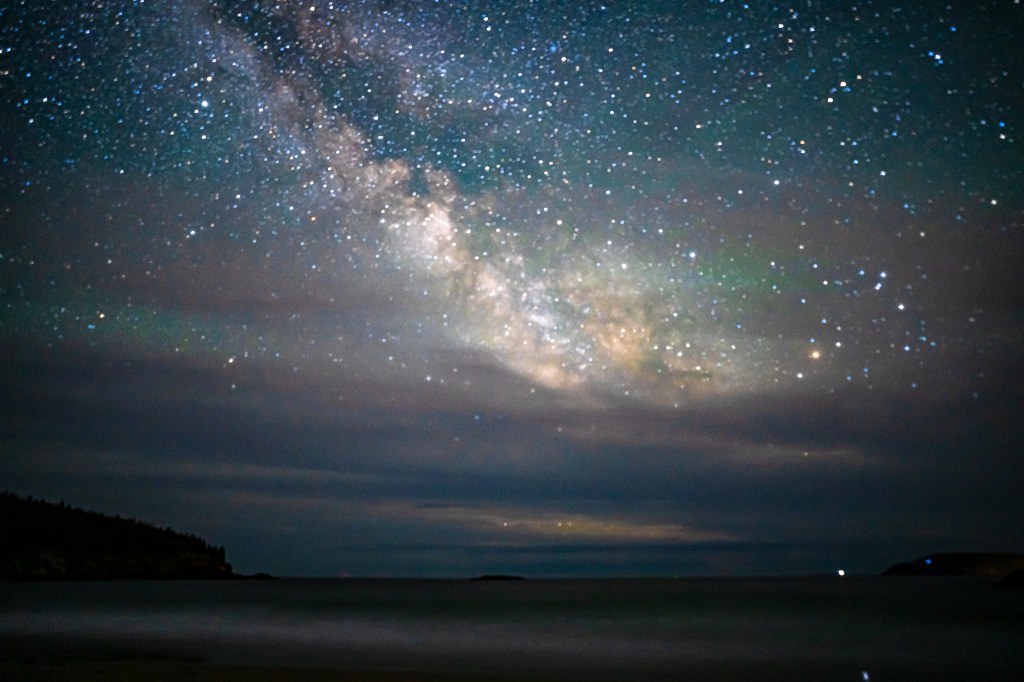
One rookie mistake that I committed was not checking the weather before I arrived at Sand beach. Apparently, there was a thunderstorm approaching from the ocean. Nevertheless, there were still quite a few people out there on the beach enjoying the night sky. I generally use a smartphone app for tracking the location of the galactic center, but it was clearly visible that night. I found a less crowded spot and started my work. Here is one of the first ones.

View of the milky way from Sand Beach.
For the stats nerd: Sony Alpha 7C with 20mm G lens, 20 sec, f/1.8, manual setting, processed in Lightroom.

To be honest, this did not turn out to be as exciting as I expected. Sure I got the galactic center, but the foreground didn’t really have anything interesting. The wind and air moisture were also making it difficult to get a sharp focus on this foreground, and with the storm fast approaching (as you can see from the clouds) I had to leave soon or run the risk of being stranded for a few hours.

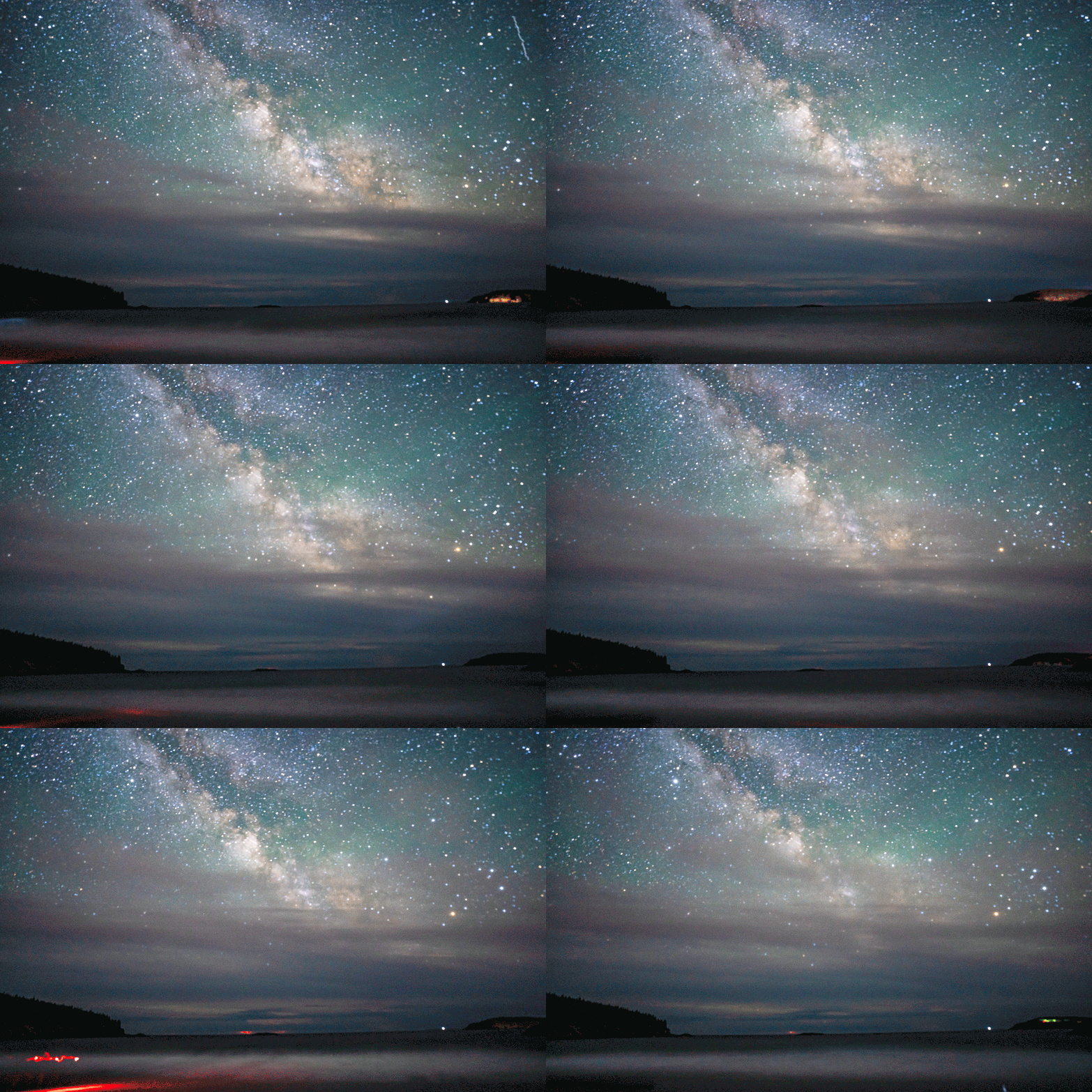
I had also planned on a series of intervallic shots of the milky way at this location but the storm threatened to pour water all over it (quite literally). I wish I could have captured more shots for a multisecond 24fps video, but here are the frames up until the moment I had to leave.

Incomplete timelapse of the Milky Way

Ocean Path

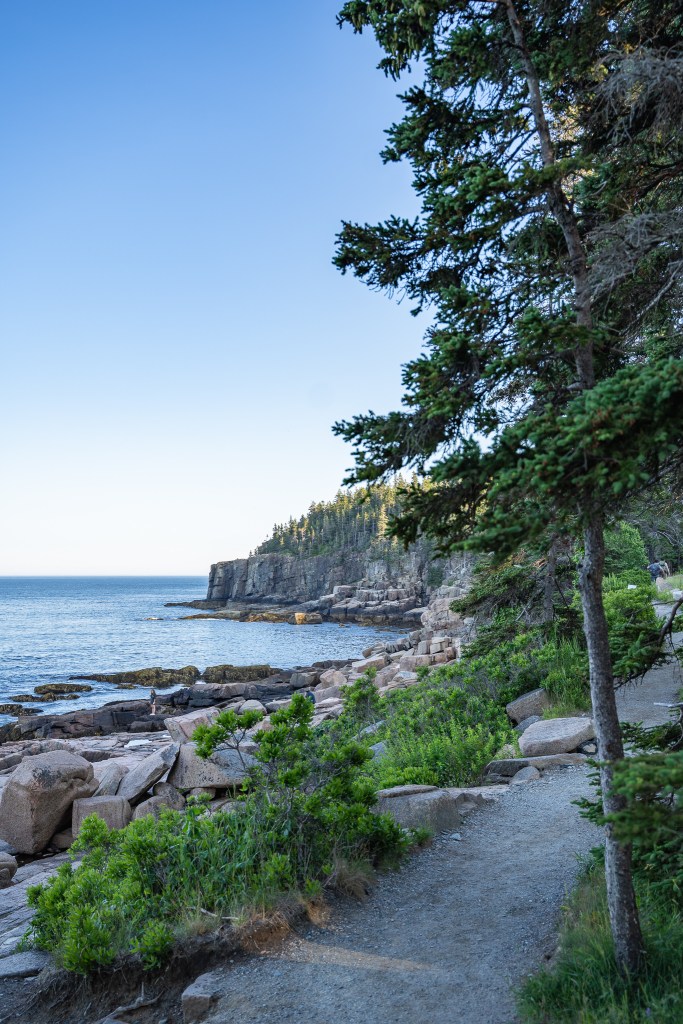
The Ocean Path is a trail running from Sand Beach to Otter Point and has some of the best spots for night sky photography. This was my second nightscape adventure in Acadia. Since I had already scouted the locations on the map earlier during the day, I headed out an hour after sunset when it was pretty dark. The Park Loop Road runs adjacent to the Ocean Path and there are numerous parking lots on this road. I parked at the lot near the Otter Cliff overlook and walked to the Ocean Path.

You must regard your safety as the utmost priority if you are walking the Ocean Path at night. The trail is not lit at all and you will have to rely on a flashlight or a bright LED for navigation. Be sure to be wary of cliffs and slippery rocks if you venture outside the trail for shooting the night sky. Small mistakes can result in serious consequences, but as long as you exercise enough caution, the rewards are worth it. If you are not comfortable doing this, the alternate option is to drive along Park Loop Road and stop for pictures as you need.

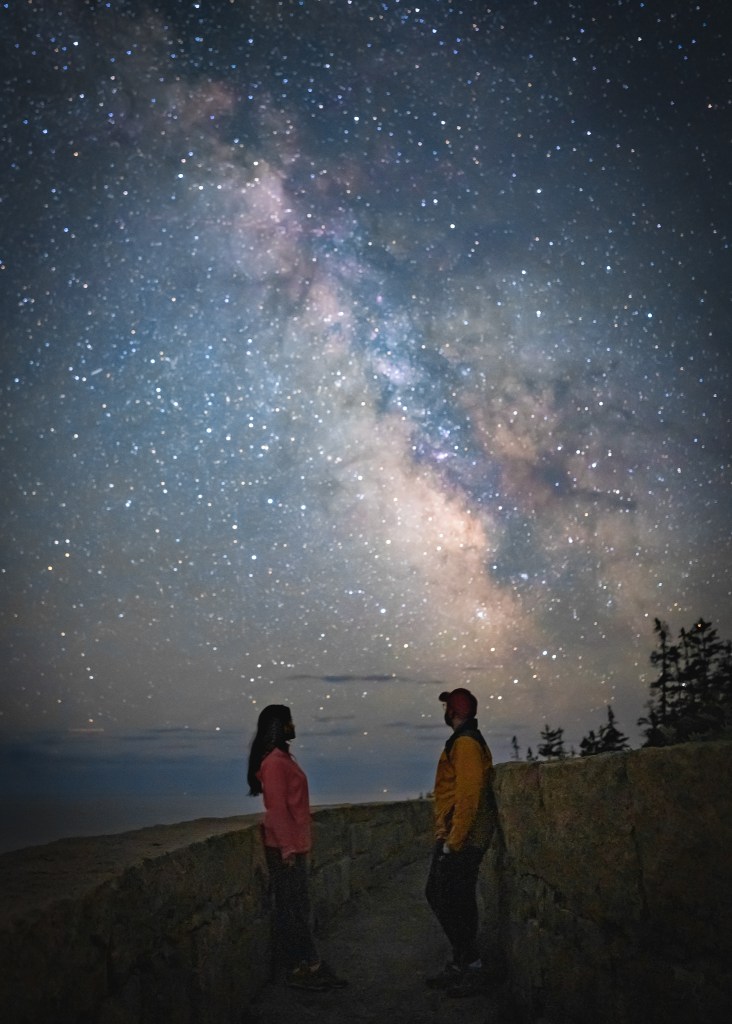
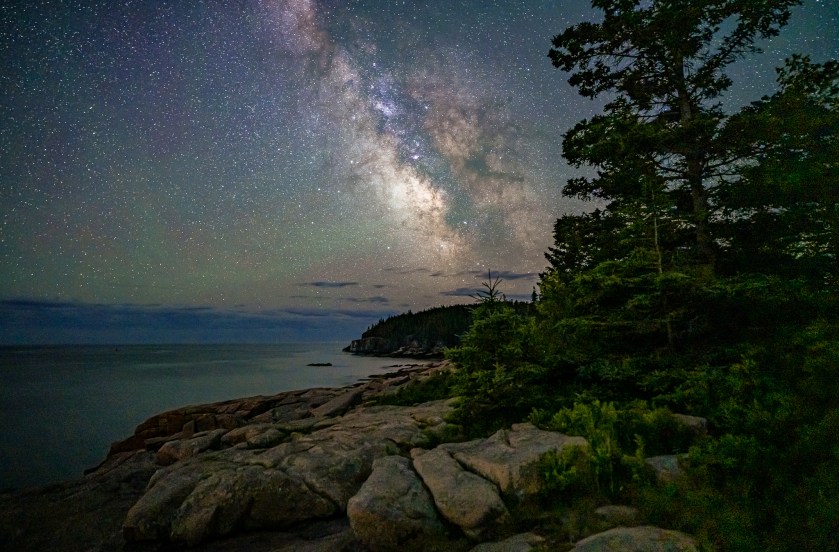
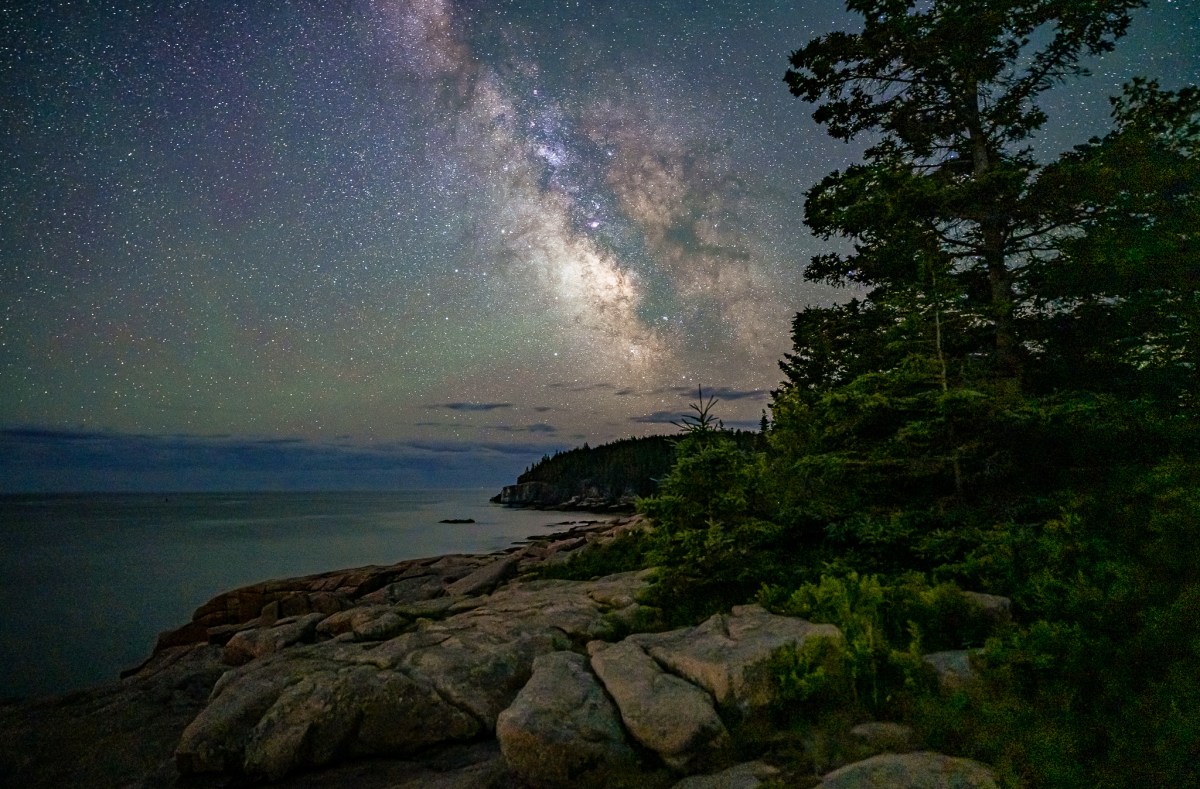
The weather on this night was clear with relatively low humidity. The moon had set within the hour after sunset and these were great astrophotography conditions. Below are some shots that came out nicely.

Milky Way from the Ocean Path. Sony Alpha 7C with 20mm G lens, 20 sec, f/1.8, ISO 1600, manual mode, processed in Lightroom.

Final thoughts

My nightscape adventure in Acadia had both successes and failures, but I felt content with the experience in the end. The final images were close to what I had visualized. The sharpness was not as per my expectation though, which makes me think I should be investing in a better quality tripod next time.

There are numerous other locations too, such as the Jordan Pond or the Eagle Lake which are probably worth exploring as well, but these had to be reserved for my next visit to Acadia.

If you are interested in night sky photography, Acadia National Park should be a top-ranked item on your bucket list.

Biking the Carriage Roads in Acadia National Park

A memorable bike ride on the Carriage Roads network in Acadia National Park.

Acadia National Park in Mount Desert Island, Maine is known for its rocky beaches, granite peaks, and stunning views of the Atlantic. You’ve perhaps imagined a trip to Acadia to be about hiking the Cadillac mountain to catch the first rays of sunlight on the eastern coast or camping in the woods to enjoy a starlit sky at night or treating yourself to delicacies such as lobster rolls and clam chowder.

In addition to these popular choices, you should consider exploring the Carriage Roads if you are planning a trip to the national park. In this post, I am writing about my recent biking experience in the Carriage Roads, and hopefully this will give you motivation to include it in your plan.

A brief history

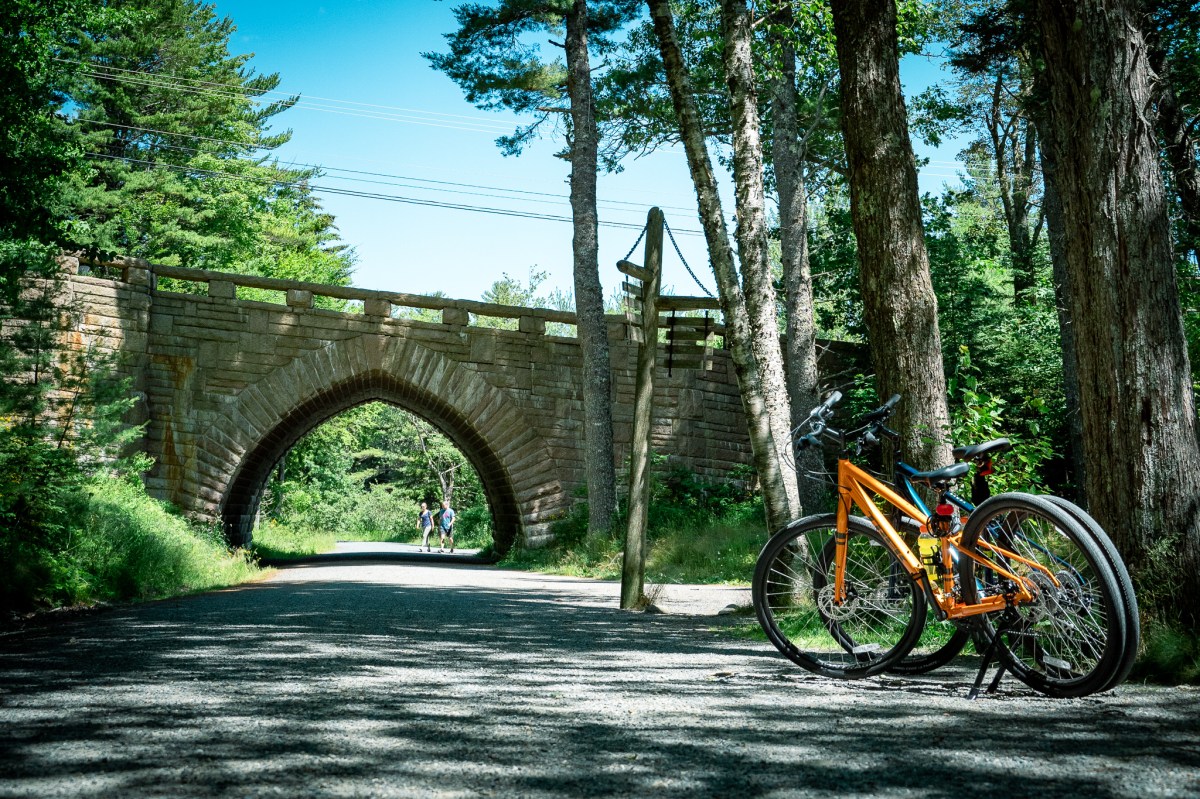
The Carriage Roads are a 45-mile network of gravel roads that run through Acadia National Park and offer amazing views of the landscape and lake systems. The roads were originally constructed by John D. Rockefeller Jr. as a means to travel in and out of Mount Desert Island without using the byways at that time. Today it is maintained by the National Park Service and a non-profit organization known as Friends of Acadia and used mostly by tourists for recreation.

Biking

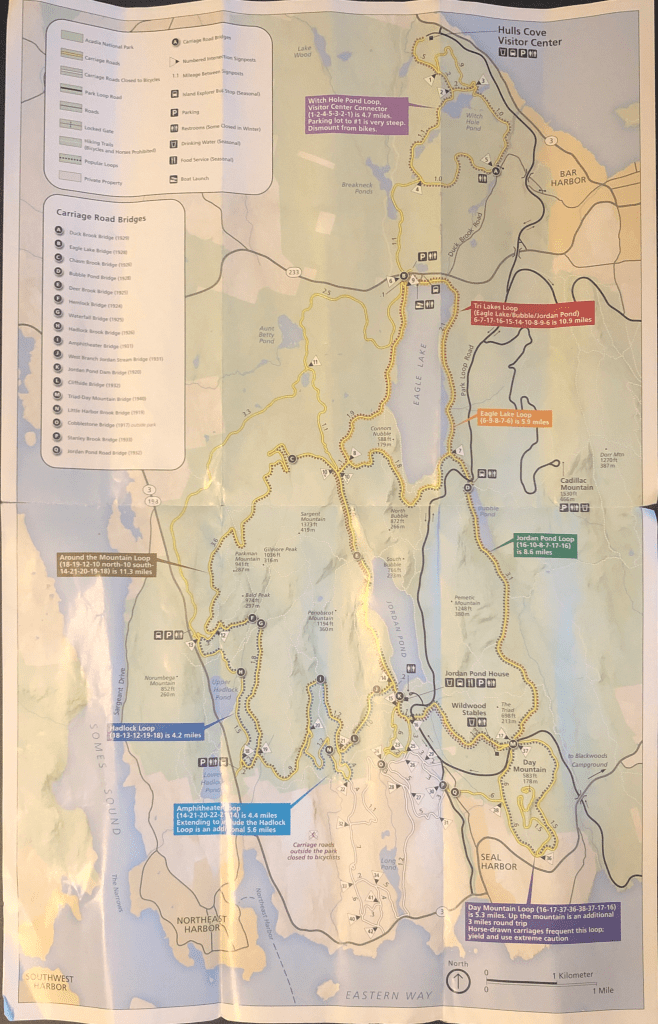
If you are a beginner-to-intermediate biker like me, you can certainly ride most of the Carriage Roads within a few hours. To give you context, my wife and I bike about 3-4 miles twice a week, and we finished the Tri-Lakes Loop in 3 hours. We do not consider ourselves regular bikers.

Map of Carriage Road loops showing points of interest

Since the roads are surfaced with fine gravel, you may benefit from a hybrid or mountain bike. Bikes may be rented from stores in Bar Harbor or you can bring your own bikes like we did. Be sure to carry water for hydration and a few energy bars as there are very few convenience options on the roads. There will be plenty of other riders if you are riding in the summer or fall, and you will have a lot of company.

Entrance points

Technically, you can start riding from anywhere in the network, but there are a couple of key spots which I mention below.

If you are staying or coming from Bar Harbor or any of the campgrounds in the western region of Mount Desert Island, you can find parking near the Eagle Lake Bridge. This is a great spot to start from with a brilliant view of Eagle Lake.

If you are camping for the night in Blackwoods campground or coming in from the south-eastern region, your best bet is to park at the parking lot near Jordan Pond House. This is the larger parking lot with plenty of spots, restrooms, and a busy restaurant. This is where we started our ride from.

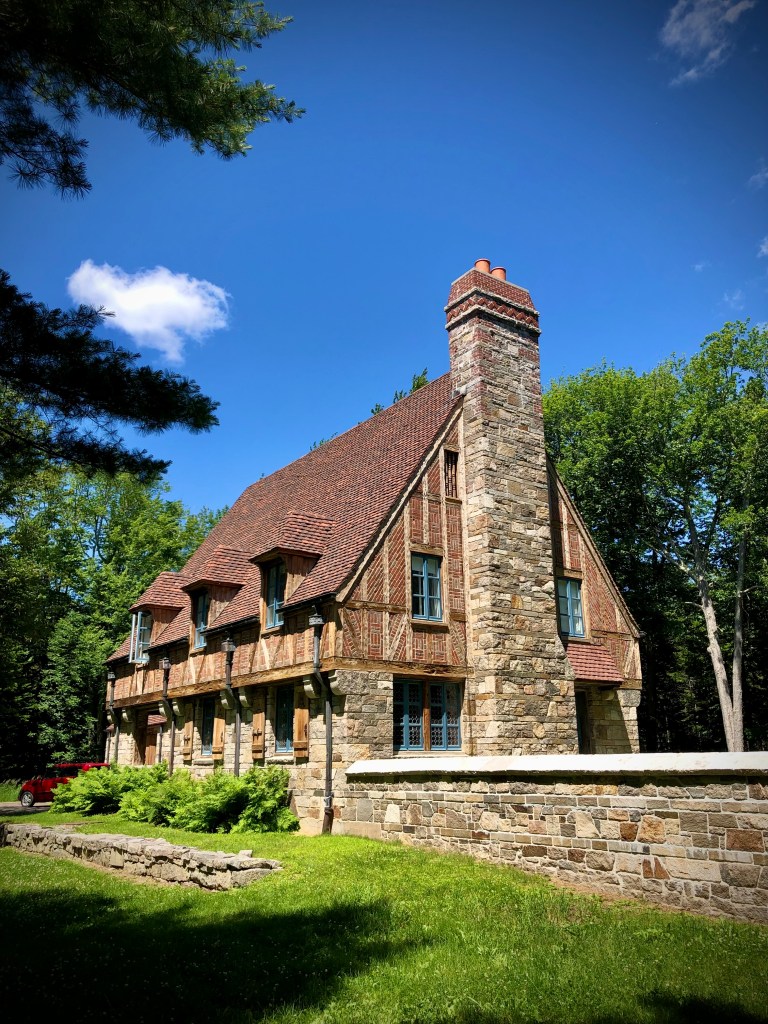
Jordan Pond Gatehouse marks one of the entrance points

Riding from Jordan Pond House

We didn’t really have an initial plan for which roads we would bike on. In general, I think may be good to make that decision given the traffic and weather on the day. In our case, we were blessed with good weather and light traffic. We got the map I shared above from the gift shop near Jordan Pond House and decided to do the Tri-Lakes loop which encompasses Eagle Lake, Jordan Pond, and Bubble Pond.

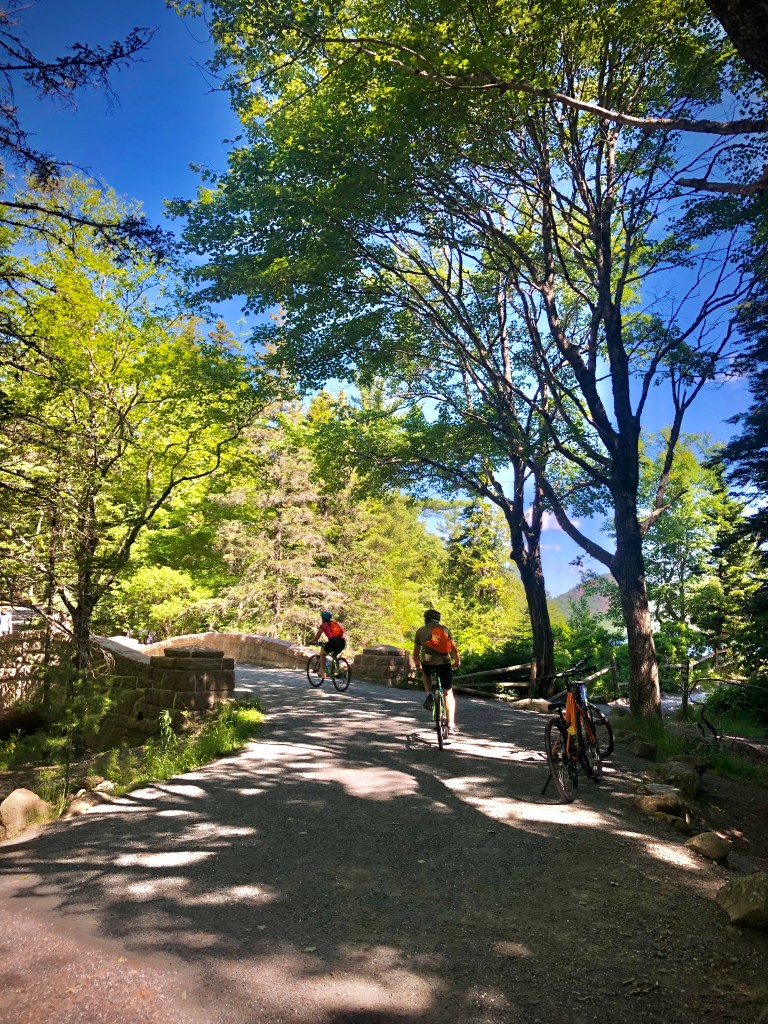
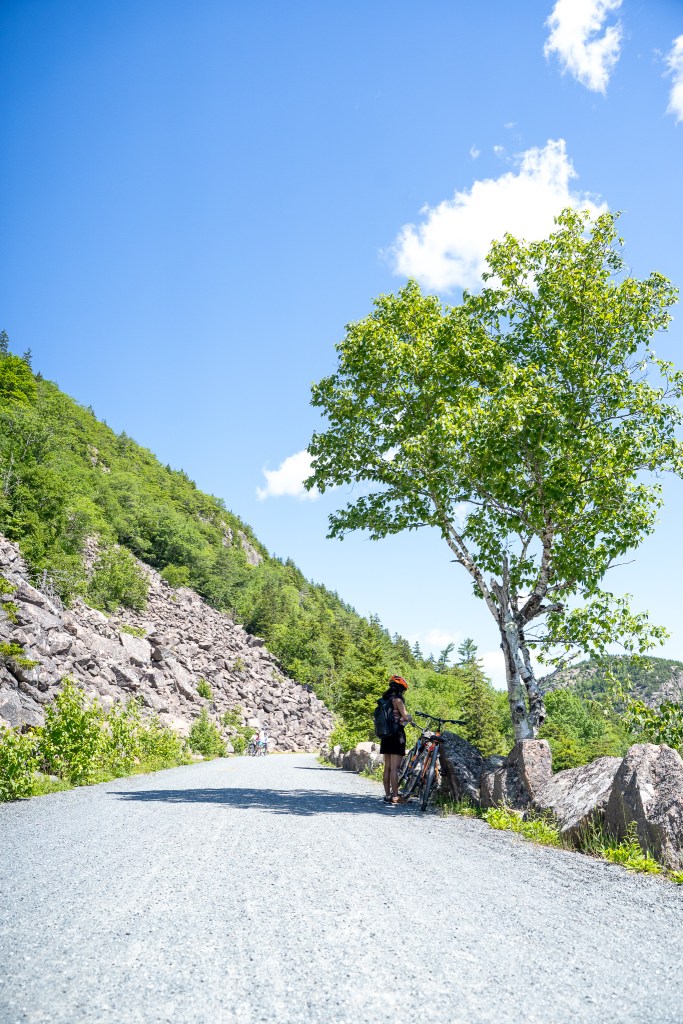
We started our ride from the entrance near Jordan Pond Gate Lodge and took the path along the west of Jordan Pond towards Eagle Lake which quickly evolved into an incline. This would be the first of the numerous inclines we had to bike through, but fear not, with difficult uphill climbs there comes speedy declines which are a lot of fun to ride on these roads. Just make sure your tires are not over-inflated in which case you will lose the much needed handling.

Near the entry point at Jordan Pond House

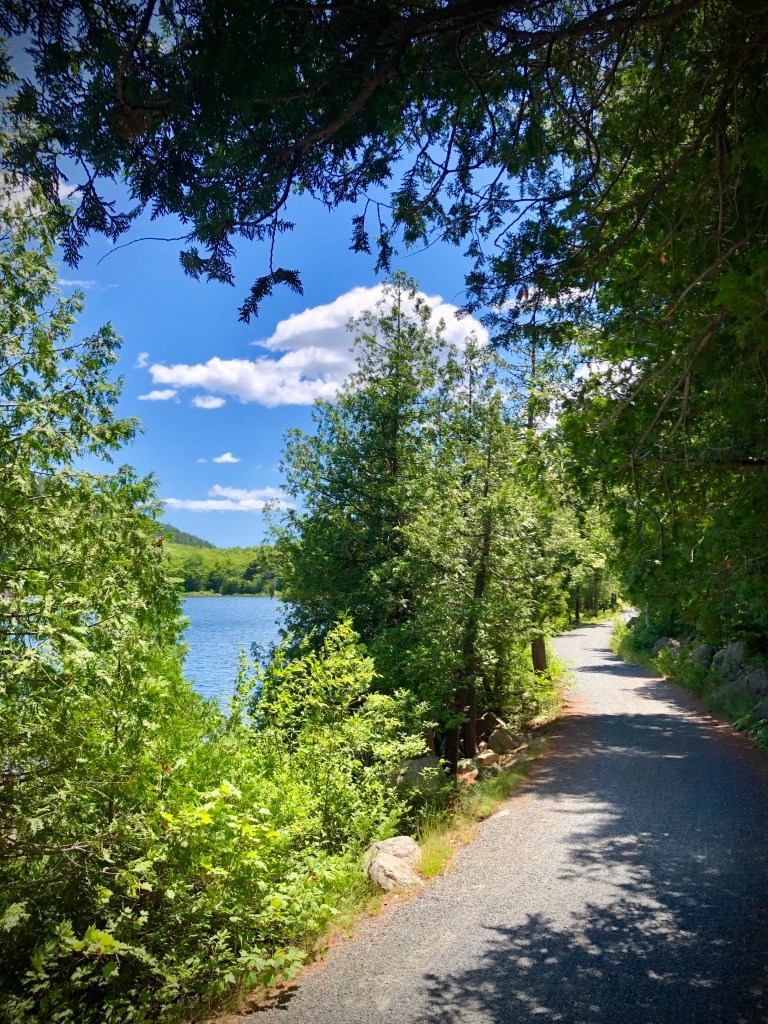
The ride along this section featured stunning views of Jordan Pond on our right. We sometimes crossed a few barren stretches with the occasional tree offering shade for rest. Other times we were riding through the cool forest. The roads are well marked with cedar signs which is great because you won’t need to bring out your phone to get directions.

Eagle Lake and Bubble Pond

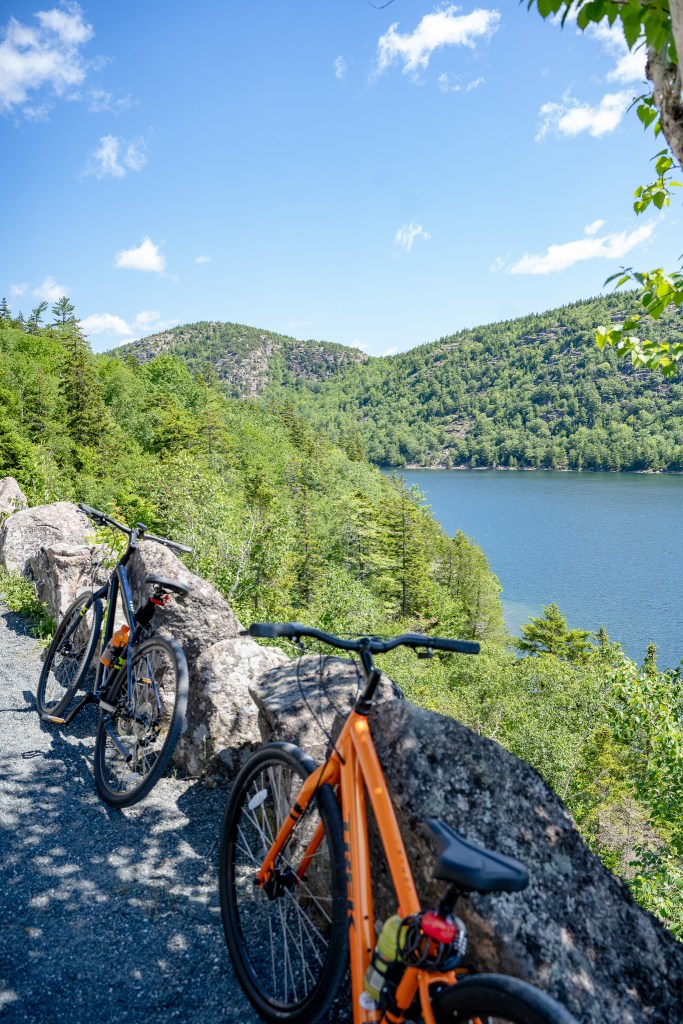
We reached Eagle lake after a fun series of inclines and declines. From the northern side, you can get a clear view of the lake and the hills surrounding Jordan Pond. We spent a few minutes here enjoying the view and took some pictures for my Acadia collection. This was the farthest point of our journey and we decided to head back from here.

View of Eagle Lake

Getting back

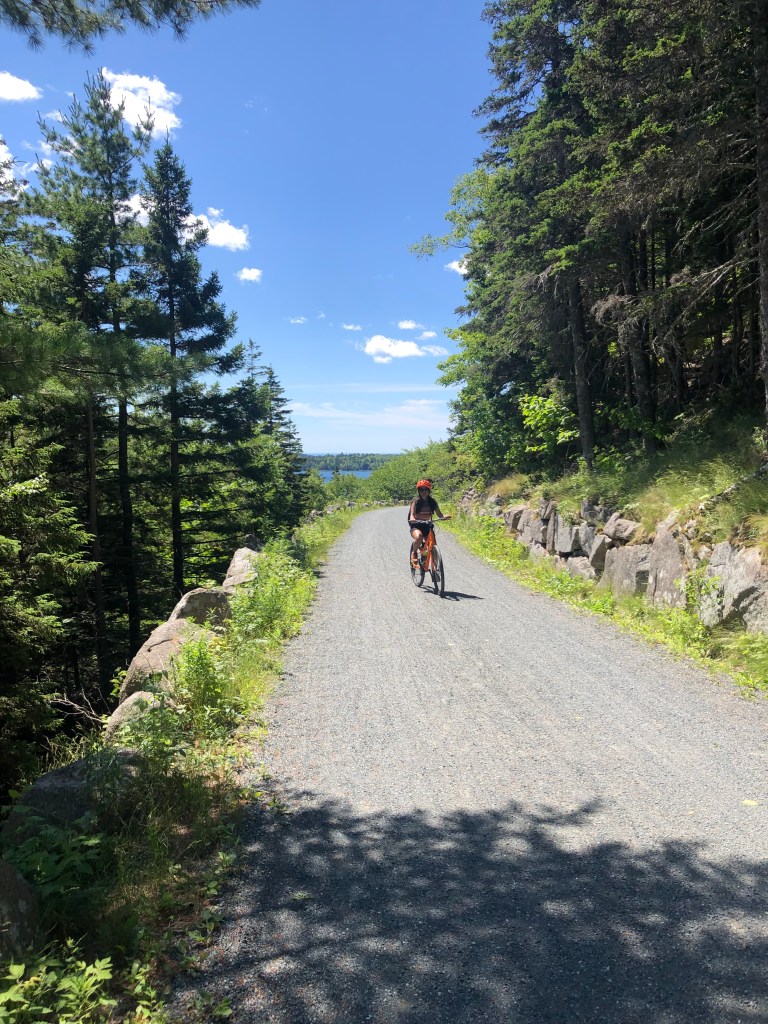
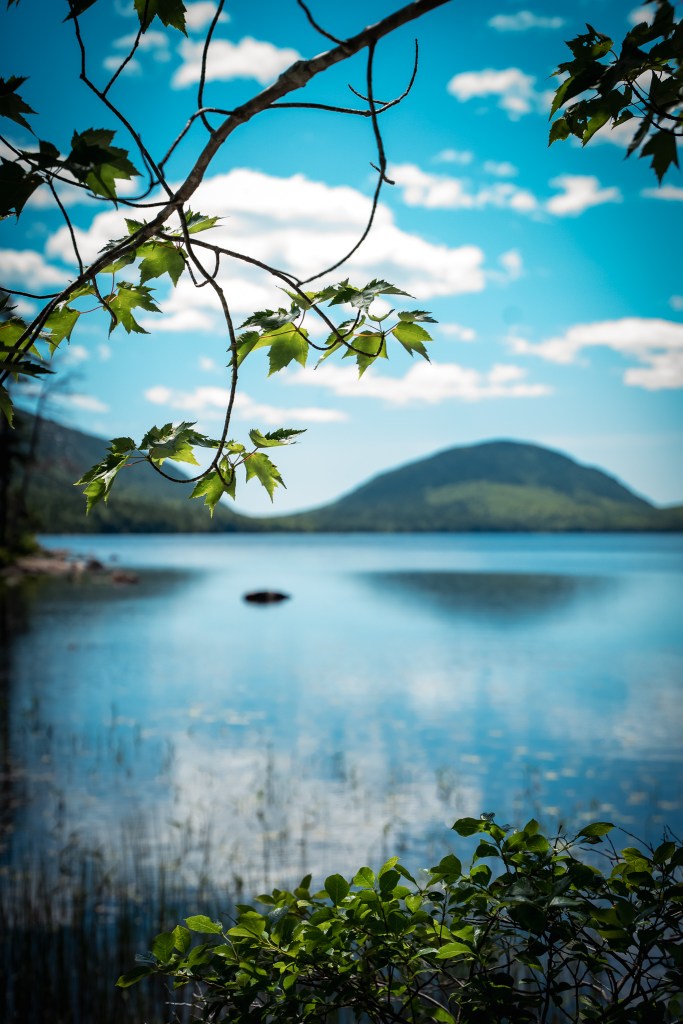
The way back to Jordan Pond was just as beautiful. There were more declines on this route and we were a lot faster than before. But that didn’t mean we didn’t have to stop a few times to catch our breath. By the time we reached Bubble Pond, we were already quite tired. We found a nice spot to rest under a tree and enjoyed the view of the lake.

The way back to Jordan Pond
Resting near Bubble Pond

Final thoughts

Biking along the Carriage paths was a unique and fun experience. It is perhaps not as popular a choice as other activities in Acadia, but that actually makes it a little more enjoyable by getting you away from the hustle-bustle of the popular areas. If you like biking I would definitely recommend it as one of the best ways to explore Acadia National Park.